


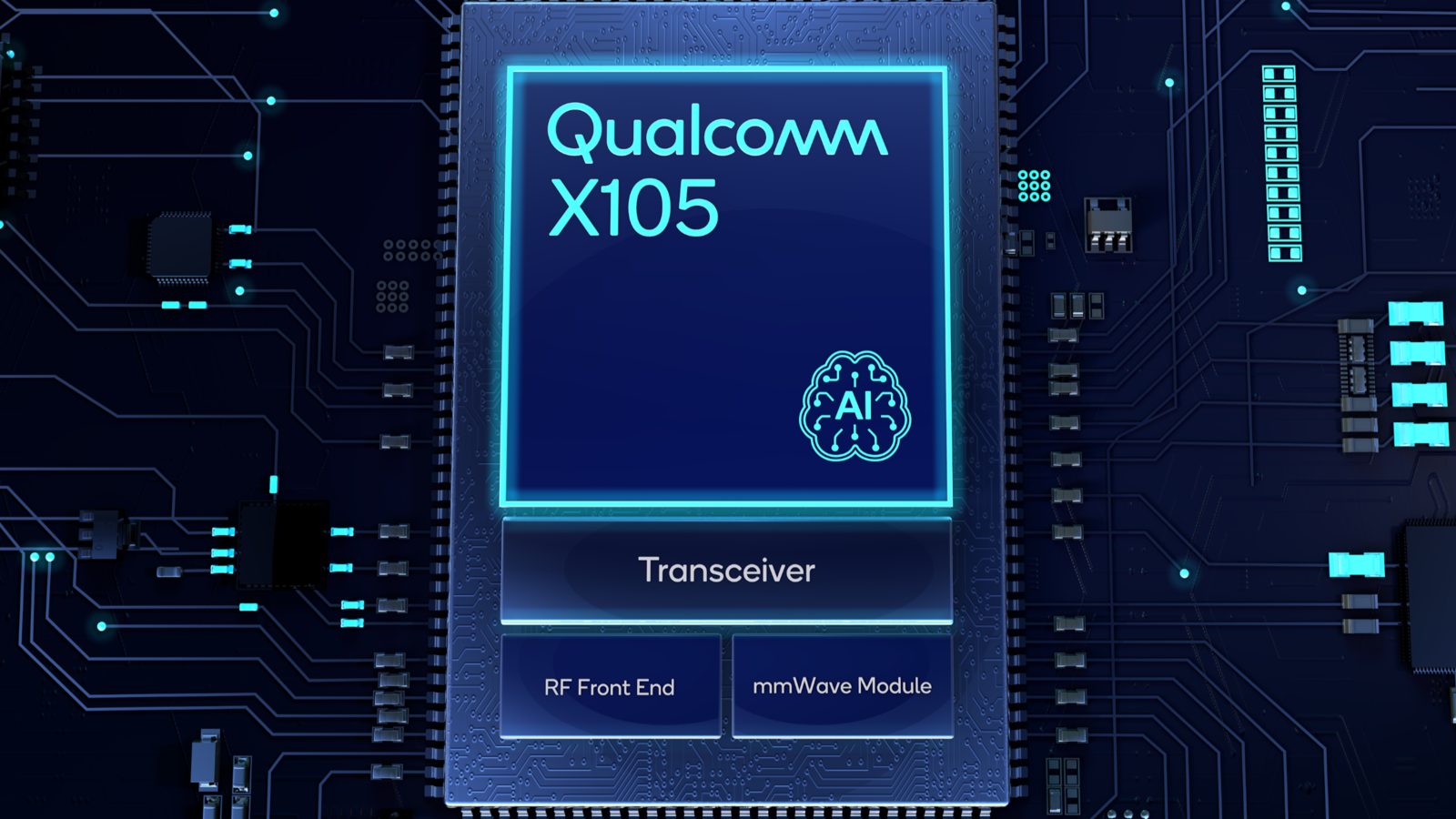
The evolution of mobile networks takes another step forward with the introduction of the Qualcomm X105 5G Modem-RF, a new architecture specifically designed for AI-powered 5G Advanced, based on artificial intelligence.
This component represents the fifth generation of integrated 5G AI processors from the company, continuing a path started in 2022 with the X70 model and reaching today the era of agentic artificial intelligence planned for 2026.
Qualcomm X105 5G Modem-RF, agentic artificial intelligence at the service of the network

The need for extremely reliable 5G connectivity has become crucial to support the multiple AI agents operating on modern mobile devices. To address this requirement, the X105 modem uses agentic AI directly inside it, optimizing performance across a wide range of usage scenarios to deliver a top-tier 5G-Advanced experience.
An advanced sensing software analyzes and predicts the conditions of radio frequencies, allowing it to maintain a highly stable connection and optimally manage factors such as signal power and network congestion.
Device manufacturers will have the opportunity to leverage dedicated APIs to access this predictive intelligence, improving the performance perceived by end users.
The system intelligently optimizes antenna management and the traffic generated by AI, the transitions between 5G and Wi-Fi networks, while supporting demanding contexts such as mobile gaming, voice calls or OTT video and social platforms.
On the hardware front, the new RF system stands out for substantial reductions in power consumption and physical size.
Compared with the previous generation, the device shows a 30% reduction in energy consumption and a 15% smaller footprint, facilitating design and integration by manufacturers.
In addition to these improvements, a new-generation Front-End RF includes advanced components such as the new Envelope Tracker QET8200, also characterized by reduced size and greater energy efficiency compared to previous models.
Satellite connectivity and advanced navigation
A key aspect of the Qualcomm X105 is its ability to keep communications active even in the absence of traditional cellular coverage.
The system integrates NR-NTN support for the connection 5G via satellite, enabling data exchange, messaging, voice calls and video transmission in ‘off-grid’ mode.
To manage these frequencies, the device relies on a dedicated portfolio complete with filters, duplexers and extractors for the NR-NTN standard.
Finally, geolocation receives an important update with the introduction of the first multi-constellation GNSS engine capable of supporting four frequencies simultaneously.
This module ensures compatibility with the L1, L2, L5 and L6 bands, significantly improving positioning accuracy and ensuring further energy savings that can reach 25%.