


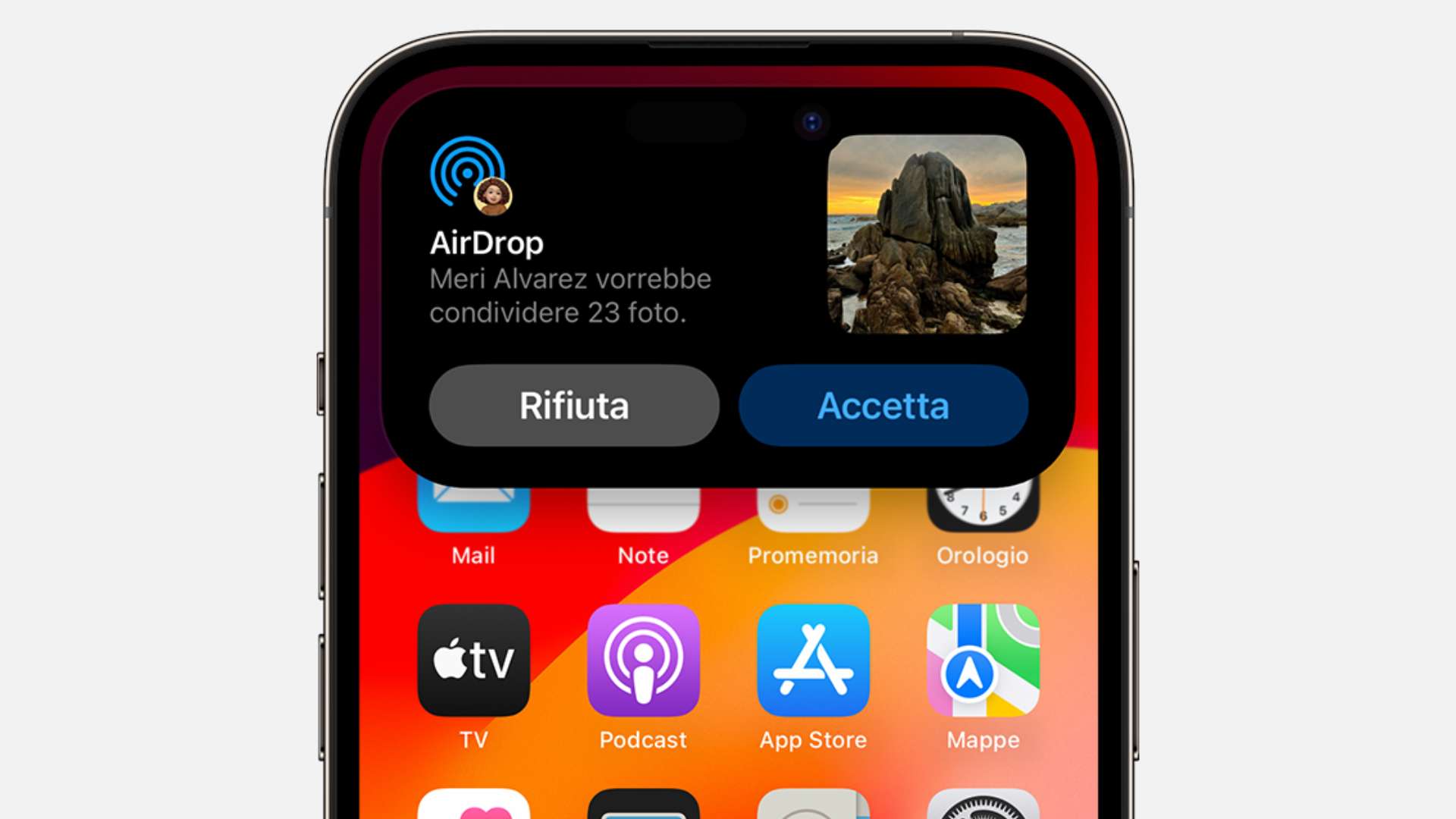
File sharing between devices with different operating systems has historically been one of the most convoluted operations for users. However, the long-standing divide between the Android and Apple worlds is gradually crumbling.
During the Mobile World Congress, OPPO announced significant news regarding its flagship devices, officializing a highly anticipated development: native compatibility between Apple’s AirDrop and Quick Share.
OPPO: When will AirDrop support arrive in Quick Share?

Through a press release issued on the occasion of the fair and dedicated to the MediaTek processors integrated in the new smartphones, the Asian giant unveiled details of the imminent update.
Starting from this March, the entire Find X9 lineup will receive a software update that will enable direct transfer to the Apple ecosystem using the Quick Share protocol.
This integration is the result of a close collaboration with Google and the same MediaTek. The benefit will be tangible and immediate: users will be able to send documents, photos and videos to iPhone, iPad and macOS devices conveniently and securely.
All this will happen without the need to install external applications, dramatically improving interoperability between the various platforms.
An expanding trend
This openness is not an isolated case. After making its first appearance on the recent Google Pixel devices, the feature is set to reach a decidedly wider user base.
Recent leaked information suggests that also other major manufacturers are taking concrete steps in the same direction. Various evidence indicates that Samsung is preparing similar support for its Galaxy S26 series.
Although this latest move is still unconfirmed speculation, it is clear that the entire mobile industry is pushing toward greater and more open communication between different operating systems.
Artificial Intelligence on ColorOS 16
Beyond the connectivity news, OPPO used the international showcase to illustrate the progress made in neural processing with ColorOS 16.
The Find X9 and Find X9 Pro integrate tools such as AI Translate and AI Portrait Glow, designed to optimize real-time translation capabilities and the qualitative processing of portrait photos.
Also particularly interesting was the presentation of Omni, a special multimodal AI model capable of running entirely on-device.
This solution enables the smartphone to analyze the live-scene being captured and to manage interactive Q&A sessions, processing data locally, thus ensuring fast execution and maximum protection of personal information.