


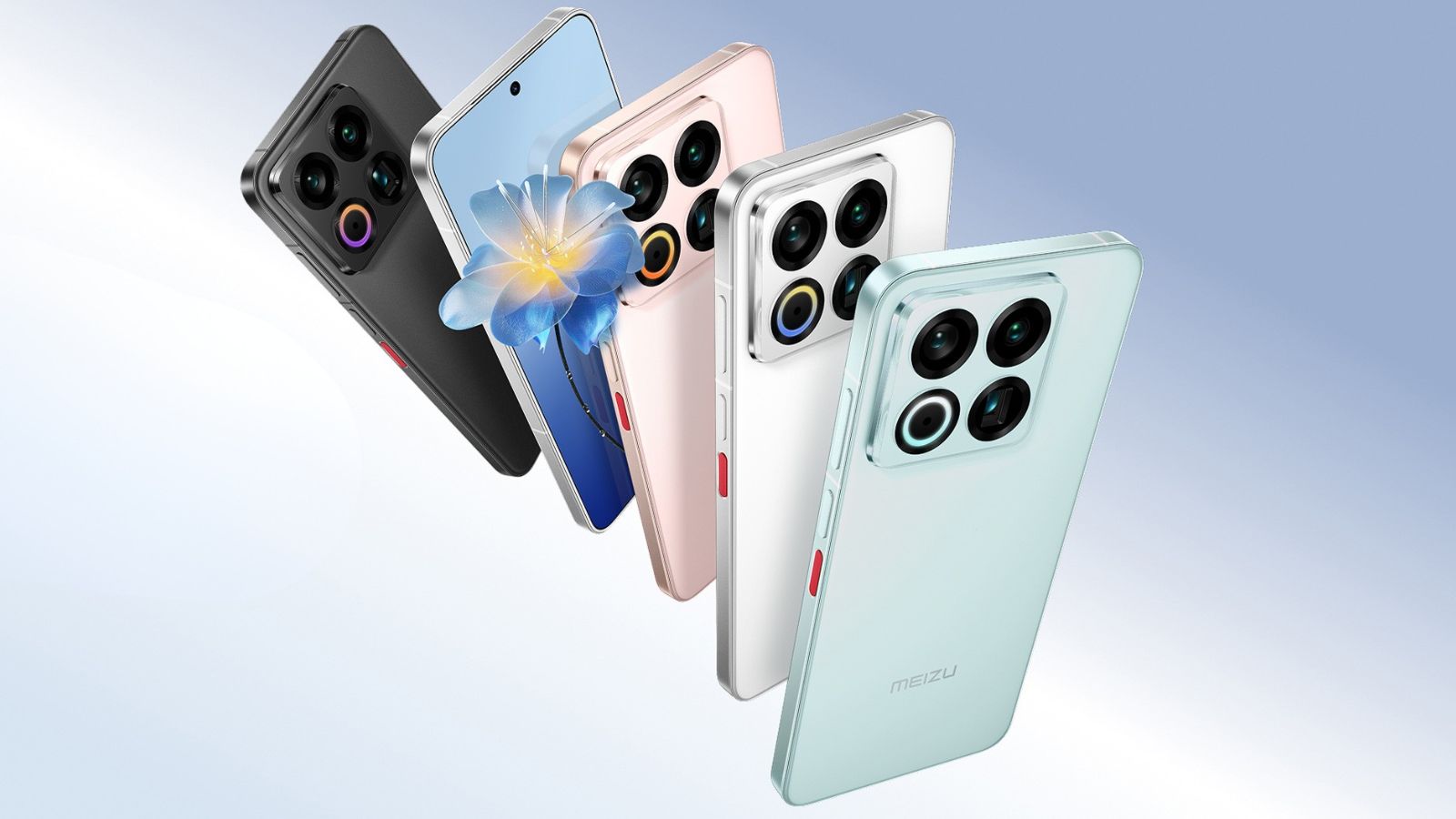
The mobile phone sector continues to lose prominent players. After the recent step back by Asus, which decided to pause its smartphone division, another historic manufacturer is set to definitely abandon the production of mobile devices.
It is Meizu, a company that seems to live a real cycle of departures and returns. For many enthusiasts, in fact, this news sounds like a strong déjà vu.
Meizu leaves us, but it’s not the first time

Earlier in 2024, the Chinese company had announced its intention to withdraw from the smartphone business, only to surprise everyone a few months later with the launch of the Meizu 22, a high-end device featuring a 6.3-inch display and the Snapdragon 8s Gen 4 processor.
Today, however, the decision appears irreversible, driven by relentless economic and commercial dynamics. The competition in the homeland has become unsustainable, but the final blow was dealt by a global crisis related to components.
The deciding factor behind this retreat is best known as the “RAMpocalypse“. It is a dramatic shortage of memory that is sending chip prices sky-high globally.
Causing this shortage is not a drop in industrial production, but the enormous and insatiable demand generated by the large companies active in artificial intelligence. Giants such as Google, Microsoft and OpenAI are gathering massive amounts of memory chips to power their data centers and the infrastructure needed to support their complex services.
This rush to hoard leaves very little resources for consumer electronics, ruthlessly hitting manufacturers operating in the low- and mid-price ranges, whose profit margins are literally wiped out by rising material costs.
The company is not closing down
Although the hardware side is giving up, the Meizu brand will not disappear. More recent information points toward a radical transformation of the company identity.
The company will devote all its energy to the development of artificial intelligence-based software, focusing in particular on the evolution of the Flyme operating system designed for next-generation vehicles.
This transition seems entirely consistent given that Meizu is partially controlled by Geely, the large electric vehicle manufacturer.
The intention is to further integrate the digital experience inside the cockpit, leveraging the expertise gained in mobile technology to create modern and responsive vehicle interfaces.
The difficulties of the Asian company reflect a crisis much more widespread. After the modest recovery recorded between 2024 and 2025, the global electronics market is preparing to face an extremely uncertain 2026. Analysts have had to revise their projections downward, now predicting a global contraction in smartphone shipments of at least 2%.
It would be the first annual decline since 2023, reversing previous growth hopes. The lower-price segments of the market are expected to be the most affected: forecasts indicate that shipments of phones priced under $100 could fall by almost 31% during the year, crushed by price rises and a generally unfavorable economic climate.
The slowdown of the Chinese powerhouse
Data from China, the world’s largest market for cellphones, confirm the gravity of the situation. The numbers released by the China Academy of Information and Communications Technology (CAICT) document a particularly severe start to 2026.
In January alone, domestic shipments of 5G-compatible phones fell 16% year over year, standing at 19.9 million units.
Similarly, total sales of mobile devices also suffered the same percentage drop, totaling about 22.9 million units.
A slowdown of this magnitude within Chinese borders inevitably creates a domino effect on a global scale, capable of influencing the entire global industry.