


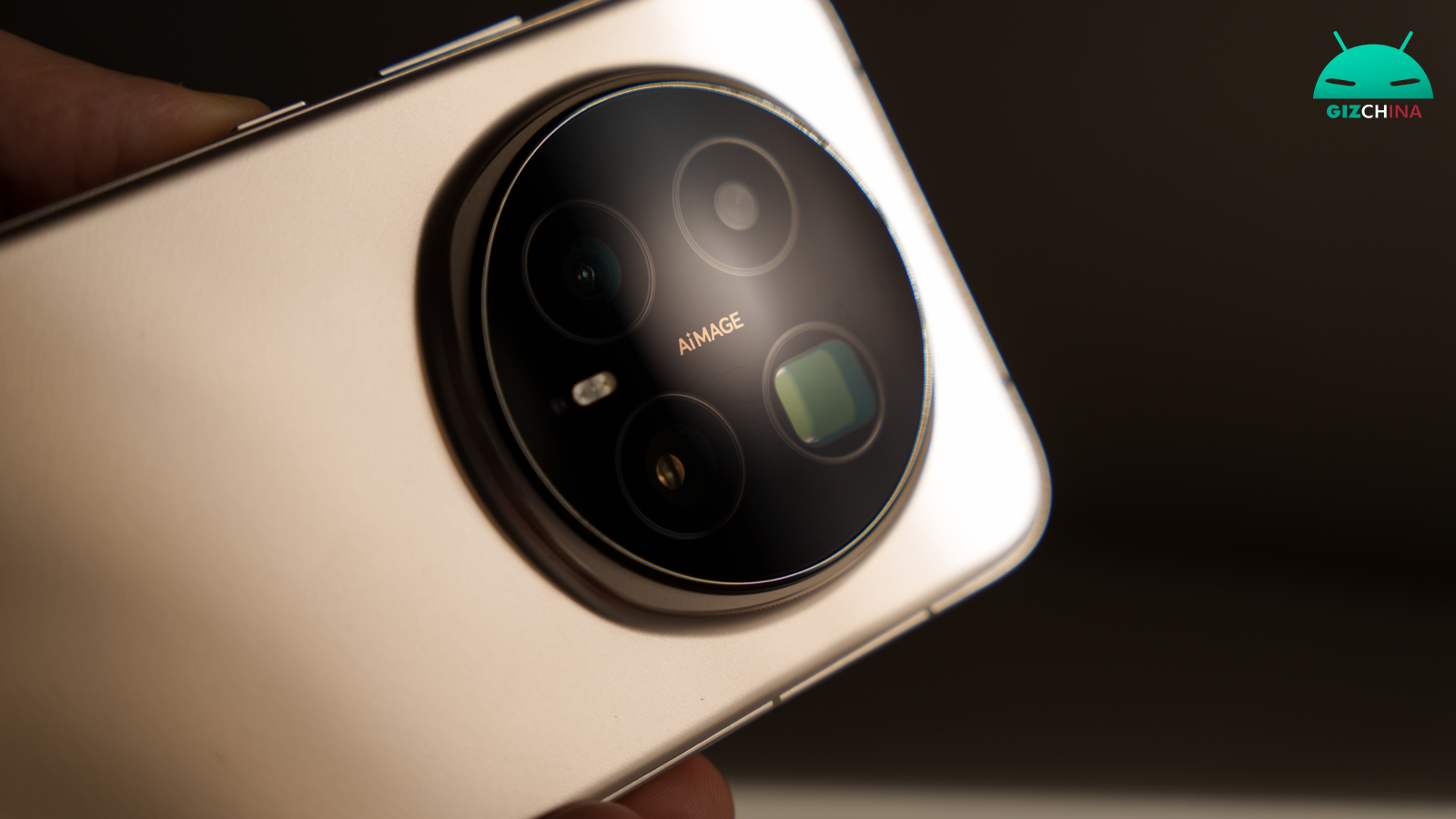
- Nox Engine: A pipeline dedicated to low-light reconstruction
- Portrait Engine: A semantic segmentation tool for depth mapping and preserving skin texture
- Stabilization Engine: A software-hardware handshake protocol for CIPA 5.5-classified stability
- Color Engine (Magic Color): A generative style transfer system
This modularity allows Honor to update specific components of the software without rewriting the entire imaging pipeline, enabling continuous evolution of photographic capabilities via OTA updates.
The Secret to Phenomenal Night Shots
Night photography has historically been limited by sensor noise and dynamic range. The Honor Magic 8 Pro tackles this problem through the Nox Engine (known as the “Night God” engine in Asian markets), which fundamentally changes how the camera interprets darkness.
The Nox Engine intervenes early in the pipeline, operating in the RAW or Bayer domain before the image is converted to YUV or JPEG. RAW-domain processing is crucial because it allows the algorithm to distinguish signal from noise with greater accuracy, since the data have not yet been compressed, demosaiced, or chroma-graded.
The engine captures a burst of images at varying exposure levels. Unlike standard HDR, the Nox Engine prioritizes texture restoration over simple brightening. The AI then analyzes the scene to identify specific materials (e.g., sky, asphalt, skin). It applies aggressive noise reduction to flat areas (sky) while preserving high-frequency noise (grain) in textured areas (asphalt) to prevent the “watercolor” effect common in competing night modes.
The AiMAGE engine is capable of 80 million inferences per second. This high-throughput capability enables the Nox Engine to map tonal curves dynamically across the frame, brightening shadows without blowing out artificial light sources (like street lamps or neon signs).
In low light, the signal-to-noise ratio (SNR) is inherently low. The Nox Engine uses convolutional neural networks (CNNs) trained on pairs of images (one noisy at high ISO, one clean at low ISO) to “learn” how to subtract the noise.
Unlike traditional methods that smooth neighboring pixels (leading to a loss of sharpness), the Nox Engine replaces noisy areas with clean textures predicted by its trained model.
Also the Honor Magic 8 Pro Is a “Concert Phone”
The Stage Mode reverses the standard exposure logic. The algorithm aggressively protects highlights. It introduces a negative exposure bias (EV -1.0 or -2.0) to ensure that details on the artist’s face are not lost to pure white.
Rather than evaluating the entire scene, the AI identifies the illuminated human figure and bases exposure solely on that area, ignoring the audience or the dark background.
Since performers move quickly, Stage Mode prioritizes shutter speed over ISO. The software compensates for the reduced light input by applying stronger post-capture denoising.
In video recording, Stage Mode often engages audio algorithms that beamform the microphones toward the visual focal point. If the user zooms in on the artist, the audio algorithm suppresses crowd noise and amplifies frequencies coming from the stage direction.
Magic Color: Why Settle for Default Styles?
Perhaps the most disruptive software feature of the Magic 8 Pro is Magic Color (in particular the AI Color Extraction function). This feature shifts the axis from simply applying static filters or LUTs toward a world of generative color grading.
Traditional cameras of the best camera phones often deliver a very characteristic look. Honor’s approach is platform-agnostic, allowing users to “steal” color science from any reference image.
- The user provides a reference image
- Deep learning algorithms analyze the reference image to extract a 3D LUT, mapping hue, saturation, and luminance across the reference image
- The system identifies 16.77 million color points and builds a transformation matrix
- This custom matrix is applied to the live preview and to the final image processing pipeline
Rather than relying on Honor engineers to define what makes a color “good”, the algorithm allows the user to define the aesthetics.
For users who do not wish to manually extract their own colors, the software includes predefined styles such as Light Negative, Intense Negative, Warm Negative, Classic Negative, Classic Positive, Nostalgic Negative.
In addition to the above, the approach allows users to quickly tailor aesthetics, with staged options to suit different shooting intents.
Portrait Engine: Semantic Depth and Better Textures
Magic 8 Pro attempts to address the over-processed look often seen in smartphone portraits (overly smooth skin, excessive subject-background separation) through a renewed Portrait Engine. The engine splits the image into semantic layers: subject, background, foreground, hair and accessories (glasses, hats).
A common failure point for artificial bokeh is hair. Honor’s algorithm uses high-frequency edge detection to create a depth map with a “smudged” look, ensuring stray hairs are not blurred along with the background.
Unlike some competitors who apply Gaussian blur to skin tones to hide imperfections, the new engine uses frequency separation. It splits the image into “high-frequency” (texture, pores) and “low-frequency” (color, tone) layers. It smooths the low-frequency layer to even out skin tone while preserving the high-frequency layer for a realistic texture.
The collaboration with Studio Harcourt, which cannot be omitted, is implemented as a set of specific presets (Vibrant, Color, Classic). These are not merely filters but distinct processing pipelines:
- Illumination Simulation: Harcourt Studio is famous for its chiaroscuro lighting. Honor’s algorithms analyze the face geometry and digitally re-illuminate the subject, deepening cheekbone shadows and adding simulated catchlights to the eyes to mimic complex studio lighting setups.
- Focal Length Emulation: The system enforces specific focal-length crops (23 mm, 35 mm, 85 mm) to emulate the compression and field of view of classic portrait lenses, improving the distortion of the face’s wide-angle lens.
Rather than relying on Honor engineers to define what constitutes a “good” color, the algorithm lets the user define the aesthetics.
For users who do not want to manually extract their own colors, the software includes predefined styles such as Light Negative, Intense Negative, Warm Negative, Classic Negative, Classic Positive, Nostalgic Negative.
Prices and Promos
Honor Magic 8 Pro remains a device capable of elevating the mobile photography experience, thanks to a mature blend of high-quality optical hardware and an AI-powered image processing suite.
If the image quality and focal versatility are what will attract you to this smartphone, the offers from Honor are what will make you fall in love.
Currently, for the 12GB RAM and 512GB storage configuration, there is a limited-time offer on Honor.com that reduces the final price to 999.90 euros.
This is a net saving of 300 euros compared to the crossed-out list price of 1,299.90 euros.
The bundle included in the price is particularly rich and includes:
- The Honor SuperCharge Power Adapter GaN Slim (Max 100 W) charger is complimentary
- The protective case Honor Magic8 Pro Case (in Cyan) complimentary
- 3 months of free Google AI Premium with 2 TB of cloud storage
- The Honor Care service, including screen protection and replacement for 12 months (one-time use)


At the time of purchase it is also possible to enrich the ecosystem by adding optional bundles at heavily discounted prices:
- Adding €9.90 can include the Honor CHOICE Earbuds X7 Lite or the tracker MiLi LiTag
- With €19.90 more you can add the smartwatch Honor CHOICE Watch 2i
- For wireless charging needs, the Honor SuperCharge Wireless Charger Stand is available at €29.90
- Moving up a level, with €49.90 you can choose between the Earbuds Clip, the Watch 2 Pro or the 66 W Power Bank
- Finally, for the most demanding, you can add Honor Watch 4 for €69.90 or the curious Honor CHOICE Portable Coffee Machine for €89.90
This combination positions the Honor Magic 8 Pro aggressively in the premium tier, offering a capable smartphone and a avalanche of accessories at a very competitive final price.
- Resolution: 50 MP
- Optical format: 1/1.3 inch
- Pixel size: native 1.2 μm. In 4-in-1 binning mode, produces 2.4 μm equivalent pixels up to 12 MP
The OV50H implements hardware-level Dual Conversion Gain (DCG). This lets the sensor read the scene at two different amplification levels simultaneously: a low level to preserve highlight details and a high level to extract information from shadows.
Both streams are fused to create a single-shot HDR image, theoretically reducing motion artifacts (ghosting) typical of sequential multi-exposure HDR.
The focus system uses HV QPD (Quad Phase Detection). Unlike Dual Pixel, which splits the pixel only horizontally or vertically, QPD splits every microlens across four diodes, allowing phase detection both horizontally and vertically. This ensures instant autofocus even on subjects with horizontally dominant textures, where traditional PDAF systems often fail.
The 23 mm lens paired with this sensor has a native aperture of f/1.6. It is interesting to note that Honor removed the variable aperture mechanism present in the Magic 6 Pro and 7 Pro (which oscillated between f/1.4 and f/2.0).
The removal of the variable aperture simplifies the mechanical module, removing movable parts prone to wear and reducing the overall thickness of the optical group. The fixed aperture at f/1.6 is extremely bright, ensuring excellent light intake for night photography.
Although the ability to physically control depth of field to keep everything in focus at macro is sacrificed, the large sensor creates a natural, pleasing bokeh.
Honor Magic 8 Pro mounts on its main camera a lenses 8P (eight elements in plastic). Increasing the number of elements allows superior correction of spherical and chromatic aberrations, essential to maintain edge sharpness on a sensor of this size with such a wide aperture.
Telephoto
The true differentiating element of the Magic 8 Pro is the periscopic telephoto, based on the Samsung ISOCELL HP9 sensor.
- Resolution: 200 MP
- Optical format: 1/1.4 inch
- Pixel size: native 0.56 μm. In 16-in-1 binning (Tetrapixel), produces 2.24 μm equivalent pixels up to 12 MP
This is an enormous size for a zoom sensor, even larger than the main sensors of many other smartphones. A larger sensor captures more light and offers a natural depth separation that is superior.
The focal length of 85 mm equivalent corresponds to a 3.7x optical zoom compared to the main camera. Thanks to the 200 MP sensor, the sensor can perform a lossless central crop to offer high-quality hybrid zoom at 7.4x or 10x, maintaining a high actual resolution without excessive upscaling.
It features f/2.6 lenses, and for a periscope this is an exceptionally wide aperture. The specifications confirm a hybrid lens construction, with elements 1G+5P (1 in glass, 5 in plastic). The glass element is essential for light transmission and thermal stability, while the plastic aspheric elements correct distortions.
Wide Camera
The ultrawide camera adopts the Omnivision OV50D sensor, a familiar choice by now.
- Resolution: 50 MP
- Optical format: 1/2.88 inch
- Pixel size: native 0.61 μm. In 4-in-1 binning mode, produces 1.22 μm equivalent pixels up to 12.5 MP
The f/2.0 aperture manages this sensor’s age fairly well, allowing plenty of light to reach it, while the 122° field of view (12 mm equivalent) enables capturing wide scenes and breathtaking landscapes.
The autofocus system allows close focusing down to 2.5 cm, turning this lens into a high-resolution macro objective.
Selfie Camera and ToF 3D
The pill-shaped cutout in the display houses both the front camera, with a sensor that could be a Sony IMX816 or a Sony LYT-500, and a 3D face recognition system.
- Resolution: 50 MP
- Optical format: 1/2.93 inch
- Pixel size: native 0.6 μm. In 4-in-1 binning mode, produces 1.2 μm equivalent pixels up to 12.5 MP
The f/2.0 aperture has a native focal length of 21 mm, perfect for group selfies, which the software then crops to offer a more natural framing for standard selfies.
Unlike the predecessor, this module is fixed-focus. Although the depth of field of such a small sensor is wide, the lack of autofocus is a small step back that could limit creativity.
Next to the camera there is a Time-of-Flight sensor for 3D face mapping, ensuring secure, instantaneous biometric unlocking and aiding in subject-background separation for portraits.
ISP and NPU, a Fundamental Part
Modern photography is, at its core, a high-speed data-processing problem. The ability of a device to capture, demosaic, denoise, and compress massive data streams in real time determines image quality as much as the optics itself.
At the heart of the Magic 8 Pro’s architecture lies the Qualcomm Snapdragon 8 Elite Gen 5 (SM8850-AC), a SoC built with a second-generation 3 nm lithography process.
This chipset brings not only more raw power but also a fundamental change in the topology of the image processor. For imaging, the critical component is indeed the interconnection between the CPU, GPU and, above all, the Hexagon NPU.

The main challenge in handling ultra-high-resolution sensors, such as the 200 MP module on the Magic 8 Pro, is bandwidth. Transferring 200 million pixels from the sensor to memory, processing them, and saving them requires data throughput on the order of gigabytes per second. The Snapdragon 8 Elite Gen 5 introduces a unified memory architecture and wider system buses to prevent bottlenecks.
Unlike traditional Image Signal Processors, which apply fixed mathematical filters (hard-coded), the Qualcomm Spectra AI ISP of the Snapdragon 8 Elite Gen 5 is deeply integrated with the NPU, enabling the execution of neural networks directly in the image processing pipeline.
The Magic 8 Pro leverages the 20-bit pipeline of the ISP Spectra. To contextualize, most previous flagships operated on 14 or 18-bit pipelines. The shift to 20 bits represents an exponential increase in the mathematical precision with which luminance and chrominance values are computed.
In practical terms, a 20-bit pipeline offers a theoretical dynamic range that far exceeds the capture capabilities of current sensors, ensuring that there is no information loss (clipping) during internal processing of RAW data before compression to JPEG or HEIF. This is crucial to preserve details in deep shadows and specular highlights, especially in high-contrast scenes.
One of the most significant innovations enabled by this ISP is the Limitless Semantic Segmentation up to 4K resolution.
In previous systems, the ISP could identify and separate a limited number of “classes” or objects in a scene (for example sky, skin, grass) to apply differential processing. The new Spectra AI removes these practical limits. The Magic 8 Pro can analyze the video frame or still image and separate it into hundreds of distinct levels in real time.
This means the processor can apply aggressive noise reduction to the night sky to remove grain, while preserving the fine texture of bricks on a lit building in the same shot, and simultaneously optimize the skin tone of a subject in the foreground. All of this happens at the single-frame level, even before the image is saved.
The improved energy efficiency is also a fundamental part of computational photography. Complex algorithms like multi-frame noise reduction or HDR fusion require the processor to operate at high frequencies for short bursts; better thermal efficiency ensures that the ISP does not throttle thermally during intense shooting sessions or prolonged 4K video recording.
Decisive Advances in Image Processing

The physical optics, while still fundamental, have ceded the stage to software as the primary differentiator of image quality; the Honor Magic8 Pro embodies the culmination of this transition toward software-defined photography.
In this device, the workload for image creation is transferred almost entirely from the hardware to neural inference engines and cloud processing pipelines.
Honor has built a hybrid computational photography architecture, integrating on-device processing for a fast shutter response with cloud-based Large Models (LM) for detail reconstruction in complex scenarios.
AiMAGE Software Architecture
At the heart of the Honor Magic8 Pro’s imaging capabilities lies the AiMAGE architecture, a proprietary software framework designed to manage the visual data flow from sensor to gallery.
AiMAGE operates as a nonlinear, semantically aware system, unlike traditional image signal processor pipelines that apply a linear chain of corrections (demosaicing, denoising, sharpening).

The most significant divergence is the device-cloud collaborative architecture. Traditional smartphone photography relies almost entirely on on-device processing to ensure privacy and speed. However, Honor has forked its processing pipeline to overcome thermal and energy constraints of mobile SoCs, creating a system that scales dynamically based on scene complexity.
Local Processing (Fast Path)
For standard captures, portrait mode, and video, the device uses an on-device AI model. This local model uses about 1.3 billion parameters. This enables real-time inference, critical to reducing shutter lag and providing immediate feedback in the viewfinder. The local engine handles exposure bracketing, autofocus tracking, and basic scene segmentation.
The priority of the local model is efficiency. It must operate within millisecond-scale windows to ensure a smooth user experience. It uses quantization techniques to reduce the precision of neural weights (often to INT8 or FP16) without perceptibly sacrificing image quality for routine tasks.
Cloud Processing (Quality Path)
For compute-intensive tasks, specifically extreme zoom and complex reconstruction in low-light conditions, the system offloads data to a cloud-based Telephoto Enhancement Large Model. This model is vastly larger, boasting 12.4 billion parameters.
This enables the system to access a much deeper database of texture patterns to reconstruct details that the physical sensor might not have fully resolved.
Leveraging cloud computing resources, Magic8 Pro can apply denoising and upscaling algorithms that would otherwise cause the smartphone to overheat or drain the battery if run locally.
The trade-off is a dependency on network connectivity for maximum quality in specific modes, introducing a variable latency that the software must mask through background processing queues.
The Four Pillars of AiMAGE
The AiMAGE brand encompasses a suite of four distinct computational engines that interlock during the image creation process:
- Nox Engine: A pipeline dedicated to low-light reconstruction
- Portrait Engine: A semantic segmentation tool for depth mapping and preserving skin texture
- Stabilization Engine: A software-hardware handshake protocol for CIPA 5.5-classified stability
- Color Engine (Magic Color): A generative style transfer system
This modularity allows Honor to update specific components of the software without rewriting the entire imaging pipeline, enabling continuous evolution of photographic capabilities via OTA updates.
The Secret to Phenomenal Night Shots
Night photography has historically been limited by sensor noise and dynamic range. The Honor Magic 8 Pro tackles this problem through the Nox Engine (known as the “Night God” engine in Asian markets), which fundamentally changes how the camera interprets darkness.
The Nox Engine intervenes early in the pipeline, operating in the RAW or Bayer domain before the image is converted to YUV or JPEG. RAW-domain processing is crucial because it allows the algorithm to distinguish signal from noise with greater accuracy, since the data have not yet been compressed, demosaiced, or chroma-graded.
The engine captures a burst of images at varying exposure levels. Unlike standard HDR, the Nox Engine prioritizes texture restoration over simple brightening. The AI then analyzes the scene to identify specific materials (e.g., sky, asphalt, skin). It applies aggressive noise reduction to flat areas (sky) while preserving high-frequency noise (grain) in textured areas (asphalt) to prevent the “watercolor” effect common in competing night modes.
The AiMAGE engine is capable of 80 million inferences per second. This high-throughput capability enables the Nox Engine to map tonal curves dynamically across the frame, brightening shadows without blowing out artificial light sources (like street lamps or neon signs).
In low light, the signal-to-noise ratio (SNR) is inherently low. The Nox Engine uses convolutional neural networks (CNNs) trained on pairs of images (one noisy at high ISO, one clean at low ISO) to “learn” how to subtract the noise.
Unlike traditional methods that smooth neighboring pixels (leading to a loss of sharpness), the Nox Engine replaces noisy areas with clean textures predicted by its trained model.
Also the Honor Magic 8 Pro Is a “Concert Phone”
The Stage Mode reverses the standard exposure logic. The algorithm aggressively protects highlights. It introduces a negative exposure bias (EV -1.0 or -2.0) to ensure that details on the artist’s face are not lost to pure white.
Rather than evaluating the entire scene, the AI identifies the illuminated human figure and bases exposure solely on that area, ignoring the audience or the dark background.
Since performers move quickly, Stage Mode prioritizes shutter speed over ISO. The software compensates for the reduced light input by applying stronger post-capture denoising.
In video recording, Stage Mode often engages audio algorithms that beamform the microphones toward the visual focal point. If the user zooms in on the artist, the audio algorithm suppresses crowd noise and amplifies frequencies coming from the stage direction.
Magic Color: Why Settle for Default Styles?
Perhaps the most disruptive software feature of the Magic 8 Pro is Magic Color (in particular the AI Color Extraction function). This feature shifts the axis from simply applying static filters or LUTs toward a world of generative color grading.
Traditional cameras of the best camera phones often deliver a very characteristic look. Honor’s approach is platform-agnostic, allowing users to “steal” color science from any reference image.
- The user provides a reference image
- Deep learning algorithms analyze the reference image to extract a 3D LUT, mapping hue, saturation, and luminance across the reference image
- The system identifies 16.77 million color points and builds a transformation matrix
- This custom matrix is applied to the live preview and to the final image processing pipeline
Rather than relying on Honor engineers to define what makes a color “good”, the algorithm allows the user to define the aesthetics.
For users who do not wish to manually extract their own colors, the software includes predefined styles such as Light Negative, Intense Negative, Warm Negative, Classic Negative, Classic Positive, Nostalgic Negative.
In addition to the above, the approach allows users to quickly tailor aesthetics, with staged options to suit different shooting intents.
Portrait Engine: Semantic Depth and Better Textures
Magic 8 Pro attempts to address the over-processed look often seen in smartphone portraits (overly smooth skin, excessive subject-background separation) through a renewed Portrait Engine. The engine splits the image into semantic layers: subject, background, foreground, hair and accessories (glasses, hats).
A common failure point for artificial bokeh is hair. Honor’s algorithm uses high-frequency edge detection to create a depth map with a “smudged” look, ensuring stray hairs are not blurred along with the background.
Unlike some competitors who apply Gaussian blur to skin tones to hide imperfections, the new engine uses frequency separation. It splits the image into “high-frequency” (texture, pores) and “low-frequency” (color, tone) layers. It smooths the low-frequency layer to even out skin tone while preserving the high-frequency layer for a realistic texture.
The collaboration with Studio Harcourt, which cannot be omitted, is implemented as a set of specific presets (Vibrant, Color, Classic). These are not merely filters but distinct processing pipelines:
- Illumination Simulation: Harcourt Studio is famous for its chiaroscuro lighting. Honor’s algorithms analyze the face geometry and digitally re-illuminate the subject, deepening cheekbone shadows and adding simulated catchlights to the eyes to mimic complex studio lighting setups.
- Focal Length Emulation: The system enforces specific focal-length crops (23 mm, 35 mm, 85 mm) to emulate the compression and field of view of classic portrait lenses, improving the distortion of the face’s wide-angle lens.
Rather than relying on Honor engineers to define what constitutes a “good” color, the algorithm lets the user define the aesthetics.
For users who do not want to manually extract their own colors, the software includes predefined styles such as Light Negative, Intense Negative, Warm Negative, Classic Negative, Classic Positive, Nostalgic Negative.
Prices and Promos
Honor Magic 8 Pro remains a device capable of elevating the mobile photography experience, thanks to a mature blend of high-quality optical hardware and an AI-powered image processing suite.
If the image quality and focal versatility are what will attract you to this smartphone, the offers from Honor are what will make you fall in love.
Currently, for the 12GB RAM and 512GB storage configuration, there is a limited-time offer on Honor.com that reduces the final price to 999.90 euros.
This is a net saving of 300 euros compared to the crossed-out list price of 1,299.90 euros.
The bundle included in the price is particularly rich and includes:
- The Honor SuperCharge Power Adapter GaN Slim (Max 100 W) charger is complimentary
- The protective case Honor Magic8 Pro Case (in Cyan) complimentary
- 3 months of free Google AI Premium with 2 TB of cloud storage
- The Honor Care service, including screen protection and replacement for 12 months (one-time use)
At the time of purchase it is also possible to enrich the ecosystem by adding optional bundles at heavily discounted prices:
- Adding €9.90 can include the Honor CHOICE Earbuds X7 Lite or the tracker MiLi LiTag
- With €19.90 more you can add the smartwatch Honor CHOICE Watch 2i
- For wireless charging needs, the Honor SuperCharge Wireless Charger Stand is available at €29.90
- Moving up a level, with €49.90 you can choose between the Earbuds Clip, the Watch 2 Pro or the 66 W Power Bank
- Finally, for the most demanding, you can add Honor Watch 4 for €69.90 or the curious Honor CHOICE Portable Coffee Machine for €89.90
This combination positions the Honor Magic 8 Pro aggressively in the premium tier, offering a capable smartphone and a avalanche of accessories at a very competitive final price.
- The user provides a reference image
- Deep learning algorithms analyze the reference image to extract a 3D LUT, mapping hue, saturation, and luminance across the reference image
- The system identifies 16.77 million color points and builds a transformation matrix
- This custom matrix is applied to the live preview and to the final image processing pipeline
Rather than relying on Honor engineers to define what makes a color “good”, the algorithm allows the user to define the aesthetics.
For users who do not wish to manually extract their own colors, the software includes predefined styles such as Light Negative, Intense Negative, Warm Negative, Classic Negative, Classic Positive, Nostalgic Negative.
In addition to the above, the approach allows users to quickly tailor aesthetics, with staged options to suit different shooting intents.
Portrait Engine: Semantic Depth and Better Textures
Magic 8 Pro attempts to address the over-processed look often seen in smartphone portraits (overly smooth skin, excessive subject-background separation) through a renewed Portrait Engine. The engine splits the image into semantic layers: subject, background, foreground, hair and accessories (glasses, hats).
A common failure point for artificial bokeh is hair. Honor’s algorithm uses high-frequency edge detection to create a depth map with a “smudged” look, ensuring stray hairs are not blurred along with the background.
Unlike some competitors who apply Gaussian blur to skin tones to hide imperfections, the new engine uses frequency separation. It splits the image into “high-frequency” (texture, pores) and “low-frequency” (color, tone) layers. It smooths the low-frequency layer to even out skin tone while preserving the high-frequency layer for a realistic texture.
The collaboration with Studio Harcourt, which cannot be omitted, is implemented as a set of specific presets (Vibrant, Color, Classic). These are not merely filters but distinct processing pipelines:
- Illumination Simulation: Harcourt Studio is famous for its chiaroscuro lighting. Honor’s algorithms analyze the face geometry and digitally re-illuminate the subject, deepening cheekbone shadows and adding simulated catchlights to the eyes to mimic complex studio lighting setups.
- Focal Length Emulation: The system enforces specific focal-length crops (23 mm, 35 mm, 85 mm) to emulate the compression and field of view of classic portrait lenses, improving the distortion of the face’s wide-angle lens.
Rather than relying on Honor engineers to define what constitutes a “good” color, the algorithm lets the user define the aesthetics.
For users who do not want to manually extract their own colors, the software includes predefined styles such as Light Negative, Intense Negative, Warm Negative, Classic Negative, Classic Positive, Nostalgic Negative.
Prices and Promos
Honor Magic 8 Pro remains a device capable of elevating the mobile photography experience, thanks to a mature blend of high-quality optical hardware and an AI-powered image processing suite.
If the image quality and focal versatility are what will attract you to this smartphone, the offers from Honor are what will make you fall in love.
Currently, for the 12GB RAM and 512GB storage configuration, there is a limited-time offer on Honor.com that reduces the final price to 999.90 euros.
This is a net saving of 300 euros compared to the crossed-out list price of 1,299.90 euros.
The bundle included in the price is particularly rich and includes:
- The Honor SuperCharge Power Adapter GaN Slim (Max 100 W) charger is complimentary
- The protective case Honor Magic8 Pro Case (in Cyan) complimentary
- 3 months of free Google AI Premium with 2 TB of cloud storage
- The Honor Care service, including screen protection and replacement for 12 months (one-time use)
At the time of purchase it is also possible to enrich the ecosystem by adding optional bundles at heavily discounted prices:
- Adding €9.90 can include the Honor CHOICE Earbuds X7 Lite or the tracker MiLi LiTag
- With €19.90 more you can add the smartwatch Honor CHOICE Watch 2i
- For wireless charging needs, the Honor SuperCharge Wireless Charger Stand is available at €29.90
- Moving up a level, with €49.90 you can choose between the Earbuds Clip, the Watch 2 Pro or the 66 W Power Bank
- Finally, for the most demanding, you can add Honor Watch 4 for €69.90 or the curious Honor CHOICE Portable Coffee Machine for €89.90
This combination positions the Honor Magic 8 Pro aggressively in the premium tier, offering a capable smartphone and a avalanche of accessories at a very competitive final price.
- Resolution: 50 MP
- Optical format: 1/1.3 inch
- Pixel size: native 1.2 μm. In 4-in-1 binning mode, produces 2.4 μm equivalent pixels up to 12 MP
The OV50H implements hardware-level Dual Conversion Gain (DCG). This lets the sensor read the scene at two different amplification levels simultaneously: a low level to preserve highlight details and a high level to extract information from shadows.
Both streams are fused to create a single-shot HDR image, theoretically reducing motion artifacts (ghosting) typical of sequential multi-exposure HDR.
The focus system uses HV QPD (Quad Phase Detection). Unlike Dual Pixel, which splits the pixel only horizontally or vertically, QPD splits every microlens across four diodes, allowing phase detection both horizontally and vertically. This ensures instant autofocus even on subjects with horizontally dominant textures, where traditional PDAF systems often fail.
The 23 mm lens paired with this sensor has a native aperture of f/1.6. It is interesting to note that Honor removed the variable aperture mechanism present in the Magic 6 Pro and 7 Pro (which oscillated between f/1.4 and f/2.0).
The removal of the variable aperture simplifies the mechanical module, removing movable parts prone to wear and reducing the overall thickness of the optical group. The fixed aperture at f/1.6 is extremely bright, ensuring excellent light intake for night photography.
Although the ability to physically control depth of field to keep everything in focus at macro is sacrificed, the large sensor creates a natural, pleasing bokeh.
Honor Magic 8 Pro mounts on its main camera a lenses 8P (eight elements in plastic). Increasing the number of elements allows superior correction of spherical and chromatic aberrations, essential to maintain edge sharpness on a sensor of this size with such a wide aperture.
Telephoto
The true differentiating element of the Magic 8 Pro is the periscopic telephoto, based on the Samsung ISOCELL HP9 sensor.
- Resolution: 200 MP
- Optical format: 1/1.4 inch
- Pixel size: native 0.56 μm. In 16-in-1 binning (Tetrapixel), produces 2.24 μm equivalent pixels up to 12 MP
This is an enormous size for a zoom sensor, even larger than the main sensors of many other smartphones. A larger sensor captures more light and offers a natural depth separation that is superior.
The focal length of 85 mm equivalent corresponds to a 3.7x optical zoom compared to the main camera. Thanks to the 200 MP sensor, the sensor can perform a lossless central crop to offer high-quality hybrid zoom at 7.4x or 10x, maintaining a high actual resolution without excessive upscaling.
It features f/2.6 lenses, and for a periscope this is an exceptionally wide aperture. The specifications confirm a hybrid lens construction, with elements 1G+5P (1 in glass, 5 in plastic). The glass element is essential for light transmission and thermal stability, while the plastic aspheric elements correct distortions.
Wide Camera
The ultrawide camera adopts the Omnivision OV50D sensor, a familiar choice by now.
- Resolution: 50 MP
- Optical format: 1/2.88 inch
- Pixel size: native 0.61 μm. In 4-in-1 binning mode, produces 1.22 μm equivalent pixels up to 12.5 MP
The f/2.0 aperture manages this sensor’s age fairly well, allowing plenty of light to reach it, while the 122° field of view (12 mm equivalent) enables capturing wide scenes and breathtaking landscapes.
The autofocus system allows close focusing down to 2.5 cm, turning this lens into a high-resolution macro objective.
Selfie Camera and ToF 3D
The pill-shaped cutout in the display houses both the front camera, with a sensor that could be a Sony IMX816 or a Sony LYT-500, and a 3D face recognition system.
- Resolution: 50 MP
- Optical format: 1/2.93 inch
- Pixel size: native 0.6 μm. In 4-in-1 binning mode, produces 1.2 μm equivalent pixels up to 12.5 MP
The f/2.0 aperture has a native focal length of 21 mm, perfect for group selfies, which the software then crops to offer a more natural framing for standard selfies.
Unlike the predecessor, this module is fixed-focus. Although the depth of field of such a small sensor is wide, the lack of autofocus is a small step back that could limit creativity.
Next to the camera there is a Time-of-Flight sensor for 3D face mapping, ensuring secure, instantaneous biometric unlocking and aiding in subject-background separation for portraits.
ISP and NPU, a Fundamental Part
Modern photography is, at its core, a high-speed data-processing problem. The ability of a device to capture, demosaic, denoise, and compress massive data streams in real time determines image quality as much as the optics itself.
At the heart of the Magic 8 Pro’s architecture lies the Qualcomm Snapdragon 8 Elite Gen 5 (SM8850-AC), a SoC built with a second-generation 3 nm lithography process.
This chipset brings not only more raw power but also a fundamental change in the topology of the image processor. For imaging, the critical component is indeed the interconnection between the CPU, GPU and, above all, the Hexagon NPU.
The main challenge in handling ultra-high-resolution sensors, such as the 200 MP module on the Magic 8 Pro, is bandwidth. Transferring 200 million pixels from the sensor to memory, processing them, and saving them requires data throughput on the order of gigabytes per second. The Snapdragon 8 Elite Gen 5 introduces a unified memory architecture and wider system buses to prevent bottlenecks.
Unlike traditional Image Signal Processors, which apply fixed mathematical filters (hard-coded), the Qualcomm Spectra AI ISP of the Snapdragon 8 Elite Gen 5 is deeply integrated with the NPU, enabling the execution of neural networks directly in the image processing pipeline.
The Magic 8 Pro leverages the 20-bit pipeline of the ISP Spectra. To contextualize, most previous flagships operated on 14 or 18-bit pipelines. The shift to 20 bits represents an exponential increase in the mathematical precision with which luminance and chrominance values are computed.
In practical terms, a 20-bit pipeline offers a theoretical dynamic range that far exceeds the capture capabilities of current sensors, ensuring that there is no information loss (clipping) during internal processing of RAW data before compression to JPEG or HEIF. This is crucial to preserve details in deep shadows and specular highlights, especially in high-contrast scenes.
One of the most significant innovations enabled by this ISP is the Limitless Semantic Segmentation up to 4K resolution.
In previous systems, the ISP could identify and separate a limited number of “classes” or objects in a scene (for example sky, skin, grass) to apply differential processing. The new Spectra AI removes these practical limits. The Magic 8 Pro can analyze the video frame or still image and separate it into hundreds of distinct levels in real time.
This means the processor can apply aggressive noise reduction to the night sky to remove grain, while preserving the fine texture of bricks on a lit building in the same shot, and simultaneously optimize the skin tone of a subject in the foreground. All of this happens at the single-frame level, even before the image is saved.
The improved energy efficiency is also a fundamental part of computational photography. Complex algorithms like multi-frame noise reduction or HDR fusion require the processor to operate at high frequencies for short bursts; better thermal efficiency ensures that the ISP does not throttle thermally during intense shooting sessions or prolonged 4K video recording.
Decisive Advances in Image Processing
The physical optics, while still fundamental, have ceded the stage to software as the primary differentiator of image quality; the Honor Magic8 Pro embodies the culmination of this transition toward software-defined photography.
In this device, the workload for image creation is transferred almost entirely from the hardware to neural inference engines and cloud processing pipelines.
Honor has built a hybrid computational photography architecture, integrating on-device processing for a fast shutter response with cloud-based Large Models (LM) for detail reconstruction in complex scenarios.
AiMAGE Software Architecture
At the heart of the Honor Magic8 Pro’s imaging capabilities lies the AiMAGE architecture, a proprietary software framework designed to manage the visual data flow from sensor to gallery.
AiMAGE operates as a nonlinear, semantically aware system, unlike traditional image signal processor pipelines that apply a linear chain of corrections (demosaicing, denoising, sharpening).
The most significant divergence is the device-cloud collaborative architecture. Traditional smartphone photography relies almost entirely on on-device processing to ensure privacy and speed. However, Honor has forked its processing pipeline to overcome thermal and energy constraints of mobile SoCs, creating a system that scales dynamically based on scene complexity.
Local Processing (Fast Path)
For standard captures, portrait mode, and video, the device uses an on-device AI model. This local model uses about 1.3 billion parameters. This enables real-time inference, critical to reducing shutter lag and providing immediate feedback in the viewfinder. The local engine handles exposure bracketing, autofocus tracking, and basic scene segmentation.
The priority of the local model is efficiency. It must operate within millisecond-scale windows to ensure a smooth user experience. It uses quantization techniques to reduce the precision of neural weights (often to INT8 or FP16) without perceptibly sacrificing image quality for routine tasks.
Cloud Processing (Quality Path)
For compute-intensive tasks, specifically extreme zoom and complex reconstruction in low-light conditions, the system offloads data to a cloud-based Telephoto Enhancement Large Model. This model is vastly larger, boasting 12.4 billion parameters.
This enables the system to access a much deeper database of texture patterns to reconstruct details that the physical sensor might not have fully resolved.
Leveraging cloud computing resources, Magic8 Pro can apply denoising and upscaling algorithms that would otherwise cause the smartphone to overheat or drain the battery if run locally.
The trade-off is a dependency on network connectivity for maximum quality in specific modes, introducing a variable latency that the software must mask through background processing queues.
The Four Pillars of AiMAGE
The AiMAGE brand encompasses a suite of four distinct computational engines that interlock during the image creation process:
- Nox Engine: A pipeline dedicated to low-light reconstruction
- Portrait Engine: A semantic segmentation tool for depth mapping and preserving skin texture
- Stabilization Engine: A software-hardware handshake protocol for CIPA 5.5-classified stability
- Color Engine (Magic Color): A generative style transfer system
This modularity allows Honor to update specific components of the software without rewriting the entire imaging pipeline, enabling continuous evolution of photographic capabilities via OTA updates.
The Secret to Phenomenal Night Shots
Night photography has historically been limited by sensor noise and dynamic range. The Honor Magic 8 Pro tackles this problem through the Nox Engine (known as the “Night God” engine in Asian markets), which fundamentally changes how the camera interprets darkness.
The Nox Engine intervenes early in the pipeline, operating in the RAW or Bayer domain before the image is converted to YUV or JPEG. RAW-domain processing is crucial because it allows the algorithm to distinguish signal from noise with greater accuracy, since the data have not yet been compressed, demosaiced, or chroma-graded.
The engine captures a burst of images at varying exposure levels. Unlike standard HDR, the Nox Engine prioritizes texture restoration over simple brightening. The AI then analyzes the scene to identify specific materials (e.g., sky, asphalt, skin). It applies aggressive noise reduction to flat areas (sky) while preserving high-frequency noise (grain) in textured areas (asphalt) to prevent the “watercolor” effect common in competing night modes.
The AiMAGE engine is capable of 80 million inferences per second. This high-throughput capability enables the Nox Engine to map tonal curves dynamically across the frame, brightening shadows without blowing out artificial light sources (like street lamps or neon signs).
In low light, the signal-to-noise ratio (SNR) is inherently low. The Nox Engine uses convolutional neural networks (CNNs) trained on pairs of images (one noisy at high ISO, one clean at low ISO) to “learn” how to subtract the noise.
Unlike traditional methods that smooth neighboring pixels (leading to a loss of sharpness), the Nox Engine replaces noisy areas with clean textures predicted by its trained model.
Also the Honor Magic 8 Pro Is a “Concert Phone”
The Stage Mode reverses the standard exposure logic. The algorithm aggressively protects highlights. It introduces a negative exposure bias (EV -1.0 or -2.0) to ensure that details on the artist’s face are not lost to pure white.
Rather than evaluating the entire scene, the AI identifies the illuminated human figure and bases exposure solely on that area, ignoring the audience or the dark background.
Since performers move quickly, Stage Mode prioritizes shutter speed over ISO. The software compensates for the reduced light input by applying stronger post-capture denoising.
In video recording, Stage Mode often engages audio algorithms that beamform the microphones toward the visual focal point. If the user zooms in on the artist, the audio algorithm suppresses crowd noise and amplifies frequencies coming from the stage direction.
Magic Color: Why Settle for Default Styles?
Perhaps the most disruptive software feature of the Magic 8 Pro is Magic Color (in particular the AI Color Extraction function). This feature shifts the axis from simply applying static filters or LUTs toward a world of generative color grading.
Traditional cameras of the best camera phones often deliver a very characteristic look. Honor’s approach is platform-agnostic, allowing users to “steal” color science from any reference image.
- The user provides a reference image
- Deep learning algorithms analyze the reference image to extract a 3D LUT, mapping hue, saturation, and luminance across the reference image
- The system identifies 16.77 million color points and builds a transformation matrix
- This custom matrix is applied to the live preview and to the final image processing pipeline
Rather than relying on Honor engineers to define what makes a color “good”, the algorithm allows the user to define the aesthetics.
For users who do not wish to manually extract their own colors, the software includes predefined styles such as Light Negative, Intense Negative, Warm Negative, Classic Negative, Classic Positive, Nostalgic Negative.
In addition to the above, the approach allows users to quickly tailor aesthetics, with staged options to suit different shooting intents.
Portrait Engine: Semantic Depth and Better Textures
Magic 8 Pro attempts to address the over-processed look often seen in smartphone portraits (overly smooth skin, excessive subject-background separation) through a renewed Portrait Engine. The engine splits the image into semantic layers: subject, background, foreground, hair and accessories (glasses, hats).
A common failure point for artificial bokeh is hair. Honor’s algorithm uses high-frequency edge detection to create a depth map with a “smudged” look, ensuring stray hairs are not blurred along with the background.
Unlike some competitors who apply Gaussian blur to skin tones to hide imperfections, the new engine uses frequency separation. It splits the image into “high-frequency” (texture, pores) and “low-frequency” (color, tone) layers. It smooths the low-frequency layer to even out skin tone while preserving the high-frequency layer for a realistic texture.
The collaboration with Studio Harcourt, which cannot be omitted, is implemented as a set of specific presets (Vibrant, Color, Classic). These are not merely filters but distinct processing pipelines:
- Illumination Simulation: Harcourt Studio is famous for its chiaroscuro lighting. Honor’s algorithms analyze the face geometry and digitally re-illuminate the subject, deepening cheekbone shadows and adding simulated catchlights to the eyes to mimic complex studio lighting setups.
- Focal Length Emulation: The system enforces specific focal-length crops (23 mm, 35 mm, 85 mm) to emulate the compression and field of view of classic portrait lenses, improving the distortion of the face’s wide-angle lens.
Rather than relying on Honor engineers to define what constitutes a “good” color, the algorithm lets the user define the aesthetics.
For users who do not want to manually extract their own colors, the software includes predefined styles such as Light Negative, Intense Negative, Warm Negative, Classic Negative, Classic Positive, Nostalgic Negative.
Prices and Promos
Honor Magic 8 Pro remains a device capable of elevating the mobile photography experience, thanks to a mature blend of high-quality optical hardware and an AI-powered image processing suite.
If the image quality and focal versatility are what will attract you to this smartphone, the offers from Honor are what will make you fall in love.
Currently, for the 12GB RAM and 512GB storage configuration, there is a limited-time offer on Honor.com that reduces the final price to 999.90 euros.
This is a net saving of 300 euros compared to the crossed-out list price of 1,299.90 euros.
The bundle included in the price is particularly rich and includes:
- The Honor SuperCharge Power Adapter GaN Slim (Max 100 W) charger is complimentary
- The protective case Honor Magic8 Pro Case (in Cyan) complimentary
- 3 months of free Google AI Premium with 2 TB of cloud storage
- The Honor Care service, including screen protection and replacement for 12 months (one-time use)
At the time of purchase it is also possible to enrich the ecosystem by adding optional bundles at heavily discounted prices:
- Adding €9.90 can include the Honor CHOICE Earbuds X7 Lite or the tracker MiLi LiTag
- With €19.90 more you can add the smartwatch Honor CHOICE Watch 2i
- For wireless charging needs, the Honor SuperCharge Wireless Charger Stand is available at €29.90
- Moving up a level, with €49.90 you can choose between the Earbuds Clip, the Watch 2 Pro or the 66 W Power Bank
- Finally, for the most demanding, you can add Honor Watch 4 for €69.90 or the curious Honor CHOICE Portable Coffee Machine for €89.90
This combination positions the Honor Magic 8 Pro aggressively in the premium tier, offering a capable smartphone and a avalanche of accessories at a very competitive final price.
- Nox Engine: A pipeline dedicated to low-light reconstruction
- Portrait Engine: A semantic segmentation tool for depth mapping and preserving skin texture
- Stabilization Engine: A software-hardware handshake protocol for CIPA 5.5-classified stability
- Color Engine (Magic Color): A generative style transfer system
This modularity allows Honor to update specific components of the software without rewriting the entire imaging pipeline, enabling continuous evolution of photographic capabilities via OTA updates.
The Secret to Phenomenal Night Shots
Night photography has historically been limited by sensor noise and dynamic range. The Honor Magic 8 Pro tackles this problem through the Nox Engine (known as the “Night God” engine in Asian markets), which fundamentally changes how the camera interprets darkness.
The Nox Engine intervenes early in the pipeline, operating in the RAW or Bayer domain before the image is converted to YUV or JPEG. RAW-domain processing is crucial because it allows the algorithm to distinguish signal from noise with greater accuracy, since the data have not yet been compressed, demosaiced, or chroma-graded.
The engine captures a burst of images at varying exposure levels. Unlike standard HDR, the Nox Engine prioritizes texture restoration over simple brightening. The AI then analyzes the scene to identify specific materials (e.g., sky, asphalt, skin). It applies aggressive noise reduction to flat areas (sky) while preserving high-frequency noise (grain) in textured areas (asphalt) to prevent the “watercolor” effect common in competing night modes.
The AiMAGE engine is capable of 80 million inferences per second. This high-throughput capability enables the Nox Engine to map tonal curves dynamically across the frame, brightening shadows without blowing out artificial light sources (like street lamps or neon signs).
In low light, the signal-to-noise ratio (SNR) is inherently low. The Nox Engine uses convolutional neural networks (CNNs) trained on pairs of images (one noisy at high ISO, one clean at low ISO) to “learn” how to subtract the noise.
Unlike traditional methods that smooth neighboring pixels (leading to a loss of sharpness), the Nox Engine replaces noisy areas with clean textures predicted by its trained model.
Also the Honor Magic 8 Pro Is a “Concert Phone”
The Stage Mode reverses the standard exposure logic. The algorithm aggressively protects highlights. It introduces a negative exposure bias (EV -1.0 or -2.0) to ensure that details on the artist’s face are not lost to pure white.
Rather than evaluating the entire scene, the AI identifies the illuminated human figure and bases exposure solely on that area, ignoring the audience or the dark background.
Since performers move quickly, Stage Mode prioritizes shutter speed over ISO. The software compensates for the reduced light input by applying stronger post-capture denoising.
In video recording, Stage Mode often engages audio algorithms that beamform the microphones toward the visual focal point. If the user zooms in on the artist, the audio algorithm suppresses crowd noise and amplifies frequencies coming from the stage direction.
Magic Color: Why Settle for Default Styles?
Perhaps the most disruptive software feature of the Magic 8 Pro is Magic Color (in particular the AI Color Extraction function). This feature shifts the axis from simply applying static filters or LUTs toward a world of generative color grading.
Traditional cameras of the best camera phones often deliver a very characteristic look. Honor’s approach is platform-agnostic, allowing users to “steal” color science from any reference image.
- The user provides a reference image
- Deep learning algorithms analyze the reference image to extract a 3D LUT, mapping hue, saturation, and luminance across the reference image
- The system identifies 16.77 million color points and builds a transformation matrix
- This custom matrix is applied to the live preview and to the final image processing pipeline
Rather than relying on Honor engineers to define what makes a color “good”, the algorithm allows the user to define the aesthetics.
For users who do not wish to manually extract their own colors, the software includes predefined styles such as Light Negative, Intense Negative, Warm Negative, Classic Negative, Classic Positive, Nostalgic Negative.
In addition to the above, the approach allows users to quickly tailor aesthetics, with staged options to suit different shooting intents.
Portrait Engine: Semantic Depth and Better Textures
Magic 8 Pro attempts to address the over-processed look often seen in smartphone portraits (overly smooth skin, excessive subject-background separation) through a renewed Portrait Engine. The engine splits the image into semantic layers: subject, background, foreground, hair and accessories (glasses, hats).
A common failure point for artificial bokeh is hair. Honor’s algorithm uses high-frequency edge detection to create a depth map with a “smudged” look, ensuring stray hairs are not blurred along with the background.
Unlike some competitors who apply Gaussian blur to skin tones to hide imperfections, the new engine uses frequency separation. It splits the image into “high-frequency” (texture, pores) and “low-frequency” (color, tone) layers. It smooths the low-frequency layer to even out skin tone while preserving the high-frequency layer for a realistic texture.
The collaboration with Studio Harcourt, which cannot be omitted, is implemented as a set of specific presets (Vibrant, Color, Classic). These are not merely filters but distinct processing pipelines:
- Illumination Simulation: Harcourt Studio is famous for its chiaroscuro lighting. Honor’s algorithms analyze the face geometry and digitally re-illuminate the subject, deepening cheekbone shadows and adding simulated catchlights to the eyes to mimic complex studio lighting setups.
- Focal Length Emulation: The system enforces specific focal-length crops (23 mm, 35 mm, 85 mm) to emulate the compression and field of view of classic portrait lenses, improving the distortion of the face’s wide-angle lens.
Rather than relying on Honor engineers to define what constitutes a “good” color, the algorithm lets the user define the aesthetics.
For users who do not want to manually extract their own colors, the software includes predefined styles such as Light Negative, Intense Negative, Warm Negative, Classic Negative, Classic Positive, Nostalgic Negative.
Prices and Promos
Honor Magic 8 Pro remains a device capable of elevating the mobile photography experience, thanks to a mature blend of high-quality optical hardware and an AI-powered image processing suite.
If the image quality and focal versatility are what will attract you to this smartphone, the offers from Honor are what will make you fall in love.
Currently, for the 12GB RAM and 512GB storage configuration, there is a limited-time offer on Honor.com that reduces the final price to 999.90 euros.
This is a net saving of 300 euros compared to the crossed-out list price of 1,299.90 euros.
The bundle included in the price is particularly rich and includes:
- The Honor SuperCharge Power Adapter GaN Slim (Max 100 W) charger is complimentary
- The protective case Honor Magic8 Pro Case (in Cyan) complimentary
- 3 months of free Google AI Premium with 2 TB of cloud storage
- The Honor Care service, including screen protection and replacement for 12 months (one-time use)
At the time of purchase it is also possible to enrich the ecosystem by adding optional bundles at heavily discounted prices:
- Adding €9.90 can include the Honor CHOICE Earbuds X7 Lite or the tracker MiLi LiTag
- With €19.90 more you can add the smartwatch Honor CHOICE Watch 2i
- For wireless charging needs, the Honor SuperCharge Wireless Charger Stand is available at €29.90
- Moving up a level, with €49.90 you can choose between the Earbuds Clip, the Watch 2 Pro or the 66 W Power Bank
- Finally, for the most demanding, you can add Honor Watch 4 for €69.90 or the curious Honor CHOICE Portable Coffee Machine for €89.90
This combination positions the Honor Magic 8 Pro aggressively in the premium tier, offering a capable smartphone and a avalanche of accessories at a very competitive final price.
- Resolution: 50 MP
- Optical format: 1/1.3 inch
- Pixel size: native 1.2 μm. In 4-in-1 binning mode, produces 2.4 μm equivalent pixels up to 12 MP
The OV50H implements hardware-level Dual Conversion Gain (DCG). This lets the sensor read the scene at two different amplification levels simultaneously: a low level to preserve highlight details and a high level to extract information from shadows.
Both streams are fused to create a single-shot HDR image, theoretically reducing motion artifacts (ghosting) typical of sequential multi-exposure HDR.
The focus system uses HV QPD (Quad Phase Detection). Unlike Dual Pixel, which splits the pixel only horizontally or vertically, QPD splits every microlens across four diodes, allowing phase detection both horizontally and vertically. This ensures instant autofocus even on subjects with horizontally dominant textures, where traditional PDAF systems often fail.
The 23 mm lens paired with this sensor has a native aperture of f/1.6. It is interesting to note that Honor removed the variable aperture mechanism present in the Magic 6 Pro and 7 Pro (which oscillated between f/1.4 and f/2.0).
The removal of the variable aperture simplifies the mechanical module, removing movable parts prone to wear and reducing the overall thickness of the optical group. The fixed aperture at f/1.6 is extremely bright, ensuring excellent light intake for night photography.
Although the ability to physically control depth of field to keep everything in focus at macro is sacrificed, the large sensor creates a natural, pleasing bokeh.
Honor Magic 8 Pro mounts on its main camera a lenses 8P (eight elements in plastic). Increasing the number of elements allows superior correction of spherical and chromatic aberrations, essential to maintain edge sharpness on a sensor of this size with such a wide aperture.
Telephoto
The true differentiating element of the Magic 8 Pro is the periscopic telephoto, based on the Samsung ISOCELL HP9 sensor.
- Resolution: 200 MP
- Optical format: 1/1.4 inch
- Pixel size: native 0.56 μm. In 16-in-1 binning (Tetrapixel), produces 2.24 μm equivalent pixels up to 12 MP
This is an enormous size for a zoom sensor, even larger than the main sensors of many other smartphones. A larger sensor captures more light and offers a natural depth separation that is superior.
The focal length of 85 mm equivalent corresponds to a 3.7x optical zoom compared to the main camera. Thanks to the 200 MP sensor, the sensor can perform a lossless central crop to offer high-quality hybrid zoom at 7.4x or 10x, maintaining a high actual resolution without excessive upscaling.
It features f/2.6 lenses, and for a periscope this is an exceptionally wide aperture. The specifications confirm a hybrid lens construction, with elements 1G+5P (1 in glass, 5 in plastic). The glass element is essential for light transmission and thermal stability, while the plastic aspheric elements correct distortions.
Wide Camera
The ultrawide camera adopts the Omnivision OV50D sensor, a familiar choice by now.
- Resolution: 50 MP
- Optical format: 1/2.88 inch
- Pixel size: native 0.61 μm. In 4-in-1 binning mode, produces 1.22 μm equivalent pixels up to 12.5 MP
The f/2.0 aperture manages this sensor’s age fairly well, allowing plenty of light to reach it, while the 122° field of view (12 mm equivalent) enables capturing wide scenes and breathtaking landscapes.
The autofocus system allows close focusing down to 2.5 cm, turning this lens into a high-resolution macro objective.
Selfie Camera and ToF 3D
The pill-shaped cutout in the display houses both the front camera, with a sensor that could be a Sony IMX816 or a Sony LYT-500, and a 3D face recognition system.
- Resolution: 50 MP
- Optical format: 1/2.93 inch
- Pixel size: native 0.6 μm. In 4-in-1 binning mode, produces 1.2 μm equivalent pixels up to 12.5 MP
The f/2.0 aperture has a native focal length of 21 mm, perfect for group selfies, which the software then crops to offer a more natural framing for standard selfies.
Unlike the predecessor, this module is fixed-focus. Although the depth of field of such a small sensor is wide, the lack of autofocus is a small step back that could limit creativity.
Next to the camera there is a Time-of-Flight sensor for 3D face mapping, ensuring secure, instantaneous biometric unlocking and aiding in subject-background separation for portraits.
ISP and NPU, a Fundamental Part
Modern photography is, at its core, a high-speed data-processing problem. The ability of a device to capture, demosaic, denoise, and compress massive data streams in real time determines image quality as much as the optics itself.
At the heart of the Magic 8 Pro’s architecture lies the Qualcomm Snapdragon 8 Elite Gen 5 (SM8850-AC), a SoC built with a second-generation 3 nm lithography process.
This chipset brings not only more raw power but also a fundamental change in the topology of the image processor. For imaging, the critical component is indeed the interconnection between the CPU, GPU and, above all, the Hexagon NPU.
The main challenge in handling ultra-high-resolution sensors, such as the 200 MP module on the Magic 8 Pro, is bandwidth. Transferring 200 million pixels from the sensor to memory, processing them, and saving them requires data throughput on the order of gigabytes per second. The Snapdragon 8 Elite Gen 5 introduces a unified memory architecture and wider system buses to prevent bottlenecks.
Unlike traditional Image Signal Processors, which apply fixed mathematical filters (hard-coded), the Qualcomm Spectra AI ISP of the Snapdragon 8 Elite Gen 5 is deeply integrated with the NPU, enabling the execution of neural networks directly in the image processing pipeline.
The Magic 8 Pro leverages the 20-bit pipeline of the ISP Spectra. To contextualize, most previous flagships operated on 14 or 18-bit pipelines. The shift to 20 bits represents an exponential increase in the mathematical precision with which luminance and chrominance values are computed.
In practical terms, a 20-bit pipeline offers a theoretical dynamic range that far exceeds the capture capabilities of current sensors, ensuring that there is no information loss (clipping) during internal processing of RAW data before compression to JPEG or HEIF. This is crucial to preserve details in deep shadows and specular highlights, especially in high-contrast scenes.
One of the most significant innovations enabled by this ISP is the Limitless Semantic Segmentation up to 4K resolution.
In previous systems, the ISP could identify and separate a limited number of “classes” or objects in a scene (for example sky, skin, grass) to apply differential processing. The new Spectra AI removes these practical limits. The Magic 8 Pro can analyze the video frame or still image and separate it into hundreds of distinct levels in real time.
This means the processor can apply aggressive noise reduction to the night sky to remove grain, while preserving the fine texture of bricks on a lit building in the same shot, and simultaneously optimize the skin tone of a subject in the foreground. All of this happens at the single-frame level, even before the image is saved.
The improved energy efficiency is also a fundamental part of computational photography. Complex algorithms like multi-frame noise reduction or HDR fusion require the processor to operate at high frequencies for short bursts; better thermal efficiency ensures that the ISP does not throttle thermally during intense shooting sessions or prolonged 4K video recording.
Decisive Advances in Image Processing
The physical optics, while still fundamental, have ceded the stage to software as the primary differentiator of image quality; the Honor Magic8 Pro embodies the culmination of this transition toward software-defined photography.
In this device, the workload for image creation is transferred almost entirely from the hardware to neural inference engines and cloud processing pipelines.
Honor has built a hybrid computational photography architecture, integrating on-device processing for a fast shutter response with cloud-based Large Models (LM) for detail reconstruction in complex scenarios.
AiMAGE Software Architecture
At the heart of the Honor Magic8 Pro’s imaging capabilities lies the AiMAGE architecture, a proprietary software framework designed to manage the visual data flow from sensor to gallery.
AiMAGE operates as a nonlinear, semantically aware system, unlike traditional image signal processor pipelines that apply a linear chain of corrections (demosaicing, denoising, sharpening).
The most significant divergence is the device-cloud collaborative architecture. Traditional smartphone photography relies almost entirely on on-device processing to ensure privacy and speed. However, Honor has forked its processing pipeline to overcome thermal and energy constraints of mobile SoCs, creating a system that scales dynamically based on scene complexity.
Local Processing (Fast Path)
For standard captures, portrait mode, and video, the device uses an on-device AI model. This local model uses about 1.3 billion parameters. This enables real-time inference, critical to reducing shutter lag and providing immediate feedback in the viewfinder. The local engine handles exposure bracketing, autofocus tracking, and basic scene segmentation.
The priority of the local model is efficiency. It must operate within millisecond-scale windows to ensure a smooth user experience. It uses quantization techniques to reduce the precision of neural weights (often to INT8 or FP16) without perceptibly sacrificing image quality for routine tasks.
Cloud Processing (Quality Path)
For compute-intensive tasks, specifically extreme zoom and complex reconstruction in low-light conditions, the system offloads data to a cloud-based Telephoto Enhancement Large Model. This model is vastly larger, boasting 12.4 billion parameters.
This enables the system to access a much deeper database of texture patterns to reconstruct details that the physical sensor might not have fully resolved.
Leveraging cloud computing resources, Magic8 Pro can apply denoising and upscaling algorithms that would otherwise cause the smartphone to overheat or drain the battery if run locally.
The trade-off is a dependency on network connectivity for maximum quality in specific modes, introducing a variable latency that the software must mask through background processing queues.
The Four Pillars of AiMAGE
The AiMAGE brand encompasses a suite of four distinct computational engines that interlock during the image creation process:
- Nox Engine: A pipeline dedicated to low-light reconstruction
- Portrait Engine: A semantic segmentation tool for depth mapping and preserving skin texture
- Stabilization Engine: A software-hardware handshake protocol for CIPA 5.5-classified stability
- Color Engine (Magic Color): A generative style transfer system
This modularity allows Honor to update specific components of the software without rewriting the entire imaging pipeline, enabling continuous evolution of photographic capabilities via OTA updates.
The Secret to Phenomenal Night Shots
Night photography has historically been limited by sensor noise and dynamic range. The Honor Magic 8 Pro tackles this problem through the Nox Engine (known as the “Night God” engine in Asian markets), which fundamentally changes how the camera interprets darkness.
The Nox Engine intervenes early in the pipeline, operating in the RAW or Bayer domain before the image is converted to YUV or JPEG. RAW-domain processing is crucial because it allows the algorithm to distinguish signal from noise with greater accuracy, since the data have not yet been compressed, demosaiced, or chroma-graded.
The engine captures a burst of images at varying exposure levels. Unlike standard HDR, the Nox Engine prioritizes texture restoration over simple brightening. The AI then analyzes the scene to identify specific materials (e.g., sky, asphalt, skin). It applies aggressive noise reduction to flat areas (sky) while preserving high-frequency noise (grain) in textured areas (asphalt) to prevent the “watercolor” effect common in competing night modes.
The AiMAGE engine is capable of 80 million inferences per second. This high-throughput capability enables the Nox Engine to map tonal curves dynamically across the frame, brightening shadows without blowing out artificial light sources (like street lamps or neon signs).
In low light, the signal-to-noise ratio (SNR) is inherently low. The Nox Engine uses convolutional neural networks (CNNs) trained on pairs of images (one noisy at high ISO, one clean at low ISO) to “learn” how to subtract the noise.
Unlike traditional methods that smooth neighboring pixels (leading to a loss of sharpness), the Nox Engine replaces noisy areas with clean textures predicted by its trained model.
Also the Honor Magic 8 Pro Is a “Concert Phone”
The Stage Mode reverses the standard exposure logic. The algorithm aggressively protects highlights. It introduces a negative exposure bias (EV -1.0 or -2.0) to ensure that details on the artist’s face are not lost to pure white.
Rather than evaluating the entire scene, the AI identifies the illuminated human figure and bases exposure solely on that area, ignoring the audience or the dark background.
Since performers move quickly, Stage Mode prioritizes shutter speed over ISO. The software compensates for the reduced light input by applying stronger post-capture denoising.
In video recording, Stage Mode often engages audio algorithms that beamform the microphones toward the visual focal point. If the user zooms in on the artist, the audio algorithm suppresses crowd noise and amplifies frequencies coming from the stage direction.
Magic Color: Why Settle for Default Styles?
Perhaps the most disruptive software feature of the Magic 8 Pro is Magic Color (in particular the AI Color Extraction function). This feature shifts the axis from simply applying static filters or LUTs toward a world of generative color grading.
Traditional cameras of the best camera phones often deliver a very characteristic look. Honor’s approach is platform-agnostic, allowing users to “steal” color science from any reference image.
- The user provides a reference image
- Deep learning algorithms analyze the reference image to extract a 3D LUT, mapping hue, saturation, and luminance across the reference image
- The system identifies 16.77 million color points and builds a transformation matrix
- This custom matrix is applied to the live preview and to the final image processing pipeline
Rather than relying on Honor engineers to define what makes a color “good”, the algorithm allows the user to define the aesthetics.
For users who do not wish to manually extract their own colors, the software includes predefined styles such as Light Negative, Intense Negative, Warm Negative, Classic Negative, Classic Positive, Nostalgic Negative.
In addition to the above, the approach allows users to quickly tailor aesthetics, with staged options to suit different shooting intents.
Portrait Engine: Semantic Depth and Better Textures
Magic 8 Pro attempts to address the over-processed look often seen in smartphone portraits (overly smooth skin, excessive subject-background separation) through a renewed Portrait Engine. The engine splits the image into semantic layers: subject, background, foreground, hair and accessories (glasses, hats).
A common failure point for artificial bokeh is hair. Honor’s algorithm uses high-frequency edge detection to create a depth map with a “smudged” look, ensuring stray hairs are not blurred along with the background.
Unlike some competitors who apply Gaussian blur to skin tones to hide imperfections, the new engine uses frequency separation. It splits the image into “high-frequency” (texture, pores) and “low-frequency” (color, tone) layers. It smooths the low-frequency layer to even out skin tone while preserving the high-frequency layer for a realistic texture.
The collaboration with Studio Harcourt, which cannot be omitted, is implemented as a set of specific presets (Vibrant, Color, Classic). These are not merely filters but distinct processing pipelines:
- Illumination Simulation: Harcourt Studio is famous for its chiaroscuro lighting. Honor’s algorithms analyze the face geometry and digitally re-illuminate the subject, deepening cheekbone shadows and adding simulated catchlights to the eyes to mimic complex studio lighting setups.
- Focal Length Emulation: The system enforces specific focal-length crops (23 mm, 35 mm, 85 mm) to emulate the compression and field of view of classic portrait lenses, improving the distortion of the face’s wide-angle lens.
Rather than relying on Honor engineers to define what constitutes a “good” color, the algorithm lets the user define the aesthetics.
For users who do not want to manually extract their own colors, the software includes predefined styles such as Light Negative, Intense Negative, Warm Negative, Classic Negative, Classic Positive, Nostalgic Negative.
Prices and Promos
Honor Magic 8 Pro remains a device capable of elevating the mobile photography experience, thanks to a mature blend of high-quality optical hardware and an AI-powered image processing suite.
If the image quality and focal versatility are what will attract you to this smartphone, the offers from Honor are what will make you fall in love.
Currently, for the 12GB RAM and 512GB storage configuration, there is a limited-time offer on Honor.com that reduces the final price to 999.90 euros.
This is a net saving of 300 euros compared to the crossed-out list price of 1,299.90 euros.
The bundle included in the price is particularly rich and includes:
- The Honor SuperCharge Power Adapter GaN Slim (Max 100 W) charger is complimentary
- The protective case Honor Magic8 Pro Case (in Cyan) complimentary
- 3 months of free Google AI Premium with 2 TB of cloud storage
- The Honor Care service, including screen protection and replacement for 12 months (one-time use)
At the time of purchase it is also possible to enrich the ecosystem by adding optional bundles at heavily discounted prices:
- Adding €9.90 can include the Honor CHOICE Earbuds X7 Lite or the tracker MiLi LiTag
- With €19.90 more you can add the smartwatch Honor CHOICE Watch 2i
- For wireless charging needs, the Honor SuperCharge Wireless Charger Stand is available at €29.90
- Moving up a level, with €49.90 you can choose between the Earbuds Clip, the Watch 2 Pro or the 66 W Power Bank
- Finally, for the most demanding, you can add Honor Watch 4 for €69.90 or the curious Honor CHOICE Portable Coffee Machine for €89.90
This combination positions the Honor Magic 8 Pro aggressively in the premium tier, offering a capable smartphone and a avalanche of accessories at a very competitive final price.
- The user provides a reference image
- Deep learning algorithms analyze the reference image to extract a 3D LUT, mapping hue, saturation, and luminance across the reference image
- The system identifies 16.77 million color points and builds a transformation matrix
- This custom matrix is applied to the live preview and to the final image processing pipeline
Rather than relying on Honor engineers to define what makes a color “good”, the algorithm allows the user to define the aesthetics.
For users who do not wish to manually extract their own colors, the software includes predefined styles such as Light Negative, Intense Negative, Warm Negative, Classic Negative, Classic Positive, Nostalgic Negative.
In addition to the above, the approach allows users to quickly tailor aesthetics, with staged options to suit different shooting intents.
Portrait Engine: Semantic Depth and Better Textures
Magic 8 Pro attempts to address the over-processed look often seen in smartphone portraits (overly smooth skin, excessive subject-background separation) through a renewed Portrait Engine. The engine splits the image into semantic layers: subject, background, foreground, hair and accessories (glasses, hats).
A common failure point for artificial bokeh is hair. Honor’s algorithm uses high-frequency edge detection to create a depth map with a “smudged” look, ensuring stray hairs are not blurred along with the background.
Unlike some competitors who apply Gaussian blur to skin tones to hide imperfections, the new engine uses frequency separation. It splits the image into “high-frequency” (texture, pores) and “low-frequency” (color, tone) layers. It smooths the low-frequency layer to even out skin tone while preserving the high-frequency layer for a realistic texture.
The collaboration with Studio Harcourt, which cannot be omitted, is implemented as a set of specific presets (Vibrant, Color, Classic). These are not merely filters but distinct processing pipelines:
- Illumination Simulation: Harcourt Studio is famous for its chiaroscuro lighting. Honor’s algorithms analyze the face geometry and digitally re-illuminate the subject, deepening cheekbone shadows and adding simulated catchlights to the eyes to mimic complex studio lighting setups.
- Focal Length Emulation: The system enforces specific focal-length crops (23 mm, 35 mm, 85 mm) to emulate the compression and field of view of classic portrait lenses, improving the distortion of the face’s wide-angle lens.
Rather than relying on Honor engineers to define what constitutes a “good” color, the algorithm lets the user define the aesthetics.
For users who do not want to manually extract their own colors, the software includes predefined styles such as Light Negative, Intense Negative, Warm Negative, Classic Negative, Classic Positive, Nostalgic Negative.
Prices and Promos
Honor Magic 8 Pro remains a device capable of elevating the mobile photography experience, thanks to a mature blend of high-quality optical hardware and an AI-powered image processing suite.
If the image quality and focal versatility are what will attract you to this smartphone, the offers from Honor are what will make you fall in love.
Currently, for the 12GB RAM and 512GB storage configuration, there is a limited-time offer on Honor.com that reduces the final price to 999.90 euros.
This is a net saving of 300 euros compared to the crossed-out list price of 1,299.90 euros.
The bundle included in the price is particularly rich and includes:
- The Honor SuperCharge Power Adapter GaN Slim (Max 100 W) charger is complimentary
- The protective case Honor Magic8 Pro Case (in Cyan) complimentary
- 3 months of free Google AI Premium with 2 TB of cloud storage
- The Honor Care service, including screen protection and replacement for 12 months (one-time use)
At the time of purchase it is also possible to enrich the ecosystem by adding optional bundles at heavily discounted prices:
- Adding €9.90 can include the Honor CHOICE Earbuds X7 Lite or the tracker MiLi LiTag
- With €19.90 more you can add the smartwatch Honor CHOICE Watch 2i
- For wireless charging needs, the Honor SuperCharge Wireless Charger Stand is available at €29.90
- Moving up a level, with €49.90 you can choose between the Earbuds Clip, the Watch 2 Pro or the 66 W Power Bank
- Finally, for the most demanding, you can add Honor Watch 4 for €69.90 or the curious Honor CHOICE Portable Coffee Machine for €89.90
This combination positions the Honor Magic 8 Pro aggressively in the premium tier, offering a capable smartphone and a avalanche of accessories at a very competitive final price.
- Nox Engine: A pipeline dedicated to low-light reconstruction
- Portrait Engine: A semantic segmentation tool for depth mapping and preserving skin texture
- Stabilization Engine: A software-hardware handshake protocol for CIPA 5.5-classified stability
- Color Engine (Magic Color): A generative style transfer system
This modularity allows Honor to update specific components of the software without rewriting the entire imaging pipeline, enabling continuous evolution of photographic capabilities via OTA updates.
The Secret to Phenomenal Night Shots
Night photography has historically been limited by sensor noise and dynamic range. The Honor Magic 8 Pro tackles this problem through the Nox Engine (known as the “Night God” engine in Asian markets), which fundamentally changes how the camera interprets darkness.
The Nox Engine intervenes early in the pipeline, operating in the RAW or Bayer domain before the image is converted to YUV or JPEG. RAW-domain processing is crucial because it allows the algorithm to distinguish signal from noise with greater accuracy, since the data have not yet been compressed, demosaiced, or chroma-graded.
The engine captures a burst of images at varying exposure levels. Unlike standard HDR, the Nox Engine prioritizes texture restoration over simple brightening. The AI then analyzes the scene to identify specific materials (e.g., sky, asphalt, skin). It applies aggressive noise reduction to flat areas (sky) while preserving high-frequency noise (grain) in textured areas (asphalt) to prevent the “watercolor” effect common in competing night modes.
The AiMAGE engine is capable of 80 million inferences per second. This high-throughput capability enables the Nox Engine to map tonal curves dynamically across the frame, brightening shadows without blowing out artificial light sources (like street lamps or neon signs).
In low light, the signal-to-noise ratio (SNR) is inherently low. The Nox Engine uses convolutional neural networks (CNNs) trained on pairs of images (one noisy at high ISO, one clean at low ISO) to “learn” how to subtract the noise.
Unlike traditional methods that smooth neighboring pixels (leading to a loss of sharpness), the Nox Engine replaces noisy areas with clean textures predicted by its trained model.
Also the Honor Magic 8 Pro Is a “Concert Phone”
The Stage Mode reverses the standard exposure logic. The algorithm aggressively protects highlights. It introduces a negative exposure bias (EV -1.0 or -2.0) to ensure that details on the artist’s face are not lost to pure white.
Rather than evaluating the entire scene, the AI identifies the illuminated human figure and bases exposure solely on that area, ignoring the audience or the dark background.
Since performers move quickly, Stage Mode prioritizes shutter speed over ISO. The software compensates for the reduced light input by applying stronger post-capture denoising.
In video recording, Stage Mode often engages audio algorithms that beamform the microphones toward the visual focal point. If the user zooms in on the artist, the audio algorithm suppresses crowd noise and amplifies frequencies coming from the stage direction.
Magic Color: Why Settle for Default Styles?
Perhaps the most disruptive software feature of the Magic 8 Pro is Magic Color (in particular the AI Color Extraction function). This feature shifts the axis from simply applying static filters or LUTs toward a world of generative color grading.
Traditional cameras of the best camera phones often deliver a very characteristic look. Honor’s approach is platform-agnostic, allowing users to “steal” color science from any reference image.
- The user provides a reference image
- Deep learning algorithms analyze the reference image to extract a 3D LUT, mapping hue, saturation, and luminance across the reference image
- The system identifies 16.77 million color points and builds a transformation matrix
- This custom matrix is applied to the live preview and to the final image processing pipeline
Rather than relying on Honor engineers to define what makes a color “good”, the algorithm allows the user to define the aesthetics.
For users who do not wish to manually extract their own colors, the software includes predefined styles such as Light Negative, Intense Negative, Warm Negative, Classic Negative, Classic Positive, Nostalgic Negative.
In addition to the above, the approach allows users to quickly tailor aesthetics, with staged options to suit different shooting intents.
Portrait Engine: Semantic Depth and Better Textures
Magic 8 Pro attempts to address the over-processed look often seen in smartphone portraits (overly smooth skin, excessive subject-background separation) through a renewed Portrait Engine. The engine splits the image into semantic layers: subject, background, foreground, hair and accessories (glasses, hats).
A common failure point for artificial bokeh is hair. Honor’s algorithm uses high-frequency edge detection to create a depth map with a “smudged” look, ensuring stray hairs are not blurred along with the background.
Unlike some competitors who apply Gaussian blur to skin tones to hide imperfections, the new engine uses frequency separation. It splits the image into “high-frequency” (texture, pores) and “low-frequency” (color, tone) layers. It smooths the low-frequency layer to even out skin tone while preserving the high-frequency layer for a realistic texture.
The collaboration with Studio Harcourt, which cannot be omitted, is implemented as a set of specific presets (Vibrant, Color, Classic). These are not merely filters but distinct processing pipelines:
- Illumination Simulation: Harcourt Studio is famous for its chiaroscuro lighting. Honor’s algorithms analyze the face geometry and digitally re-illuminate the subject, deepening cheekbone shadows and adding simulated catchlights to the eyes to mimic complex studio lighting setups.
- Focal Length Emulation: The system enforces specific focal-length crops (23 mm, 35 mm, 85 mm) to emulate the compression and field of view of classic portrait lenses, improving the distortion of the face’s wide-angle lens.
Rather than relying on Honor engineers to define what constitutes a “good” color, the algorithm lets the user define the aesthetics.
For users who do not want to manually extract their own colors, the software includes predefined styles such as Light Negative, Intense Negative, Warm Negative, Classic Negative, Classic Positive, Nostalgic Negative.
Prices and Promos
Honor Magic 8 Pro remains a device capable of elevating the mobile photography experience, thanks to a mature blend of high-quality optical hardware and an AI-powered image processing suite.
If the image quality and focal versatility are what will attract you to this smartphone, the offers from Honor are what will make you fall in love.
Currently, for the 12GB RAM and 512GB storage configuration, there is a limited-time offer on Honor.com that reduces the final price to 999.90 euros.
This is a net saving of 300 euros compared to the crossed-out list price of 1,299.90 euros.
The bundle included in the price is particularly rich and includes:
- The Honor SuperCharge Power Adapter GaN Slim (Max 100 W) charger is complimentary
- The protective case Honor Magic8 Pro Case (in Cyan) complimentary
- 3 months of free Google AI Premium with 2 TB of cloud storage
- The Honor Care service, including screen protection and replacement for 12 months (one-time use)
At the time of purchase it is also possible to enrich the ecosystem by adding optional bundles at heavily discounted prices:
- Adding €9.90 can include the Honor CHOICE Earbuds X7 Lite or the tracker MiLi LiTag
- With €19.90 more you can add the smartwatch Honor CHOICE Watch 2i
- For wireless charging needs, the Honor SuperCharge Wireless Charger Stand is available at €29.90
- Moving up a level, with €49.90 you can choose between the Earbuds Clip, the Watch 2 Pro or the 66 W Power Bank
- Finally, for the most demanding, you can add Honor Watch 4 for €69.90 or the curious Honor CHOICE Portable Coffee Machine for €89.90
This combination positions the Honor Magic 8 Pro aggressively in the premium tier, offering a capable smartphone and a avalanche of accessories at a very competitive final price.
- Resolution: 50 MP
- Optical format: 1/1.3 inch
- Pixel size: native 1.2 μm. In 4-in-1 binning mode, produces 2.4 μm equivalent pixels up to 12 MP
The OV50H implements hardware-level Dual Conversion Gain (DCG). This lets the sensor read the scene at two different amplification levels simultaneously: a low level to preserve highlight details and a high level to extract information from shadows.
Both streams are fused to create a single-shot HDR image, theoretically reducing motion artifacts (ghosting) typical of sequential multi-exposure HDR.
The focus system uses HV QPD (Quad Phase Detection). Unlike Dual Pixel, which splits the pixel only horizontally or vertically, QPD splits every microlens across four diodes, allowing phase detection both horizontally and vertically. This ensures instant autofocus even on subjects with horizontally dominant textures, where traditional PDAF systems often fail.
The 23 mm lens paired with this sensor has a native aperture of f/1.6. It is interesting to note that Honor removed the variable aperture mechanism present in the Magic 6 Pro and 7 Pro (which oscillated between f/1.4 and f/2.0).
The removal of the variable aperture simplifies the mechanical module, removing movable parts prone to wear and reducing the overall thickness of the optical group. The fixed aperture at f/1.6 is extremely bright, ensuring excellent light intake for night photography.
Although the ability to physically control depth of field to keep everything in focus at macro is sacrificed, the large sensor creates a natural, pleasing bokeh.
Honor Magic 8 Pro mounts on its main camera a lenses 8P (eight elements in plastic). Increasing the number of elements allows superior correction of spherical and chromatic aberrations, essential to maintain edge sharpness on a sensor of this size with such a wide aperture.
Telephoto
The true differentiating element of the Magic 8 Pro is the periscopic telephoto, based on the Samsung ISOCELL HP9 sensor.
- Resolution: 200 MP
- Optical format: 1/1.4 inch
- Pixel size: native 0.56 μm. In 16-in-1 binning (Tetrapixel), produces 2.24 μm equivalent pixels up to 12 MP
This is an enormous size for a zoom sensor, even larger than the main sensors of many other smartphones. A larger sensor captures more light and offers a natural depth separation that is superior.
The focal length of 85 mm equivalent corresponds to a 3.7x optical zoom compared to the main camera. Thanks to the 200 MP sensor, the sensor can perform a lossless central crop to offer high-quality hybrid zoom at 7.4x or 10x, maintaining a high actual resolution without excessive upscaling.
It features f/2.6 lenses, and for a periscope this is an exceptionally wide aperture. The specifications confirm a hybrid lens construction, with elements 1G+5P (1 in glass, 5 in plastic). The glass element is essential for light transmission and thermal stability, while the plastic aspheric elements correct distortions.
Wide Camera
The ultrawide camera adopts the Omnivision OV50D sensor, a familiar choice by now.
- Resolution: 50 MP
- Optical format: 1/2.88 inch
- Pixel size: native 0.61 μm. In 4-in-1 binning mode, produces 1.22 μm equivalent pixels up to 12.5 MP
The f/2.0 aperture manages this sensor’s age fairly well, allowing plenty of light to reach it, while the 122° field of view (12 mm equivalent) enables capturing wide scenes and breathtaking landscapes.
The autofocus system allows close focusing down to 2.5 cm, turning this lens into a high-resolution macro objective.
Selfie Camera and ToF 3D
The pill-shaped cutout in the display houses both the front camera, with a sensor that could be a Sony IMX816 or a Sony LYT-500, and a 3D face recognition system.
- Resolution: 50 MP
- Optical format: 1/2.93 inch
- Pixel size: native 0.6 μm. In 4-in-1 binning mode, produces 1.2 μm equivalent pixels up to 12.5 MP
The f/2.0 aperture has a native focal length of 21 mm, perfect for group selfies, which the software then crops to offer a more natural framing for standard selfies.
Unlike the predecessor, this module is fixed-focus. Although the depth of field of such a small sensor is wide, the lack of autofocus is a small step back that could limit creativity.
Next to the camera there is a Time-of-Flight sensor for 3D face mapping, ensuring secure, instantaneous biometric unlocking and aiding in subject-background separation for portraits.
ISP and NPU, a Fundamental Part
Modern photography is, at its core, a high-speed data-processing problem. The ability of a device to capture, demosaic, denoise, and compress massive data streams in real time determines image quality as much as the optics itself.
At the heart of the Magic 8 Pro’s architecture lies the Qualcomm Snapdragon 8 Elite Gen 5 (SM8850-AC), a SoC built with a second-generation 3 nm lithography process.
This chipset brings not only more raw power but also a fundamental change in the topology of the image processor. For imaging, the critical component is indeed the interconnection between the CPU, GPU and, above all, the Hexagon NPU.
The main challenge in handling ultra-high-resolution sensors, such as the 200 MP module on the Magic 8 Pro, is bandwidth. Transferring 200 million pixels from the sensor to memory, processing them, and saving them requires data throughput on the order of gigabytes per second. The Snapdragon 8 Elite Gen 5 introduces a unified memory architecture and wider system buses to prevent bottlenecks.
Unlike traditional Image Signal Processors, which apply fixed mathematical filters (hard-coded), the Qualcomm Spectra AI ISP of the Snapdragon 8 Elite Gen 5 is deeply integrated with the NPU, enabling the execution of neural networks directly in the image processing pipeline.
The Magic 8 Pro leverages the 20-bit pipeline of the ISP Spectra. To contextualize, most previous flagships operated on 14 or 18-bit pipelines. The shift to 20 bits represents an exponential increase in the mathematical precision with which luminance and chrominance values are computed.
In practical terms, a 20-bit pipeline offers a theoretical dynamic range that far exceeds the capture capabilities of current sensors, ensuring that there is no information loss (clipping) during internal processing of RAW data before compression to JPEG or HEIF. This is crucial to preserve details in deep shadows and specular highlights, especially in high-contrast scenes.
One of the most significant innovations enabled by this ISP is the Limitless Semantic Segmentation up to 4K resolution.
In previous systems, the ISP could identify and separate a limited number of “classes” or objects in a scene (for example sky, skin, grass) to apply differential processing. The new Spectra AI removes these practical limits. The Magic 8 Pro can analyze the video frame or still image and separate it into hundreds of distinct levels in real time.
This means the processor can apply aggressive noise reduction to the night sky to remove grain, while preserving the fine texture of bricks on a lit building in the same shot, and simultaneously optimize the skin tone of a subject in the foreground. All of this happens at the single-frame level, even before the image is saved.
The improved energy efficiency is also a fundamental part of computational photography. Complex algorithms like multi-frame noise reduction or HDR fusion require the processor to operate at high frequencies for short bursts; better thermal efficiency ensures that the ISP does not throttle thermally during intense shooting sessions or prolonged 4K video recording.
Decisive Advances in Image Processing
The physical optics, while still fundamental, have ceded the stage to software as the primary differentiator of image quality; the Honor Magic8 Pro embodies the culmination of this transition toward software-defined photography.
In this device, the workload for image creation is transferred almost entirely from the hardware to neural inference engines and cloud processing pipelines.
Honor has built a hybrid computational photography architecture, integrating on-device processing for a fast shutter response with cloud-based Large Models (LM) for detail reconstruction in complex scenarios.
AiMAGE Software Architecture
At the heart of the Honor Magic8 Pro’s imaging capabilities lies the AiMAGE architecture, a proprietary software framework designed to manage the visual data flow from sensor to gallery.
AiMAGE operates as a nonlinear, semantically aware system, unlike traditional image signal processor pipelines that apply a linear chain of corrections (demosaicing, denoising, sharpening).
The most significant divergence is the device-cloud collaborative architecture. Traditional smartphone photography relies almost entirely on on-device processing to ensure privacy and speed. However, Honor has forked its processing pipeline to overcome thermal and energy constraints of mobile SoCs, creating a system that scales dynamically based on scene complexity.
Local Processing (Fast Path)
For standard captures, portrait mode, and video, the device uses an on-device AI model. This local model uses about 1.3 billion parameters. This enables real-time inference, critical to reducing shutter lag and providing immediate feedback in the viewfinder. The local engine handles exposure bracketing, autofocus tracking, and basic scene segmentation.
The priority of the local model is efficiency. It must operate within millisecond-scale windows to ensure a smooth user experience. It uses quantization techniques to reduce the precision of neural weights (often to INT8 or FP16) without perceptibly sacrificing image quality for routine tasks.
Cloud Processing (Quality Path)
For compute-intensive tasks, specifically extreme zoom and complex reconstruction in low-light conditions, the system offloads data to a cloud-based Telephoto Enhancement Large Model. This model is vastly larger, boasting 12.4 billion parameters.
This enables the system to access a much deeper database of texture patterns to reconstruct details that the physical sensor might not have fully resolved.
Leveraging cloud computing resources, Magic8 Pro can apply denoising and upscaling algorithms that would otherwise cause the smartphone to overheat or drain the battery if run locally.
The trade-off is a dependency on network connectivity for maximum quality in specific modes, introducing a variable latency that the software must mask through background processing queues.
The Four Pillars of AiMAGE
The AiMAGE brand encompasses a suite of four distinct computational engines that interlock during the image creation process:
- Nox Engine: A pipeline dedicated to low-light reconstruction
- Portrait Engine: A semantic segmentation tool for depth mapping and preserving skin texture
- Stabilization Engine: A software-hardware handshake protocol for CIPA 5.5-classified stability
- Color Engine (Magic Color): A generative style transfer system
This modularity allows Honor to update specific components of the software without rewriting the entire imaging pipeline, enabling continuous evolution of photographic capabilities via OTA updates.
The Secret to Phenomenal Night Shots
Night photography has historically been limited by sensor noise and dynamic range. The Honor Magic 8 Pro tackles this problem through the Nox Engine (known as the “Night God” engine in Asian markets), which fundamentally changes how the camera interprets darkness.
The Nox Engine intervenes early in the pipeline, operating in the RAW or Bayer domain before the image is converted to YUV or JPEG. RAW-domain processing is crucial because it allows the algorithm to distinguish signal from noise with greater accuracy, since the data have not yet been compressed, demosaiced, or chroma-graded.
The engine captures a burst of images at varying exposure levels. Unlike standard HDR, the Nox Engine prioritizes texture restoration over simple brightening. The AI then analyzes the scene to identify specific materials (e.g., sky, asphalt, skin). It applies aggressive noise reduction to flat areas (sky) while preserving high-frequency noise (grain) in textured areas (asphalt) to prevent the “watercolor” effect common in competing night modes.
The AiMAGE engine is capable of 80 million inferences per second. This high-throughput capability enables the Nox Engine to map tonal curves dynamically across the frame, brightening shadows without blowing out artificial light sources (like street lamps or neon signs).
In low light, the signal-to-noise ratio (SNR) is inherently low. The Nox Engine uses convolutional neural networks (CNNs) trained on pairs of images (one noisy at high ISO, one clean at low ISO) to “learn” how to subtract the noise.
Unlike traditional methods that smooth neighboring pixels (leading to a loss of sharpness), the Nox Engine replaces noisy areas with clean textures predicted by its trained model.
Also the Honor Magic 8 Pro Is a “Concert Phone”
The Stage Mode reverses the standard exposure logic. The algorithm aggressively protects highlights. It introduces a negative exposure bias (EV -1.0 or -2.0) to ensure that details on the artist’s face are not lost to pure white.
Rather than evaluating the entire scene, the AI identifies the illuminated human figure and bases exposure solely on that area, ignoring the audience or the dark background.
Since performers move quickly, Stage Mode prioritizes shutter speed over ISO. The software compensates for the reduced light input by applying stronger post-capture denoising.
In video recording, Stage Mode often engages audio algorithms that beamform the microphones toward the visual focal point. If the user zooms in on the artist, the audio algorithm suppresses crowd noise and amplifies frequencies coming from the stage direction.
Magic Color: Why Settle for Default Styles?
Perhaps the most disruptive software feature of the Magic 8 Pro is Magic Color (in particular the AI Color Extraction function). This feature shifts the axis from simply applying static filters or LUTs toward a world of generative color grading.
Traditional cameras of the best camera phones often deliver a very characteristic look. Honor’s approach is platform-agnostic, allowing users to “steal” color science from any reference image.
- The user provides a reference image
- Deep learning algorithms analyze the reference image to extract a 3D LUT, mapping hue, saturation, and luminance across the reference image
- The system identifies 16.77 million color points and builds a transformation matrix
- This custom matrix is applied to the live preview and to the final image processing pipeline
Rather than relying on Honor engineers to define what makes a color “good”, the algorithm allows the user to define the aesthetics.
For users who do not wish to manually extract their own colors, the software includes predefined styles such as Light Negative, Intense Negative, Warm Negative, Classic Negative, Classic Positive, Nostalgic Negative.
In addition to the above, the approach allows users to quickly tailor aesthetics, with staged options to suit different shooting intents.
Portrait Engine: Semantic Depth and Better Textures
Magic 8 Pro attempts to address the over-processed look often seen in smartphone portraits (overly smooth skin, excessive subject-background separation) through a renewed Portrait Engine. The engine splits the image into semantic layers: subject, background, foreground, hair and accessories (glasses, hats).
A common failure point for artificial bokeh is hair. Honor’s algorithm uses high-frequency edge detection to create a depth map with a “smudged” look, ensuring stray hairs are not blurred along with the background.
Unlike some competitors who apply Gaussian blur to skin tones to hide imperfections, the new engine uses frequency separation. It splits the image into “high-frequency” (texture, pores) and “low-frequency” (color, tone) layers. It smooths the low-frequency layer to even out skin tone while preserving the high-frequency layer for a realistic texture.
The collaboration with Studio Harcourt, which cannot be omitted, is implemented as a set of specific presets (Vibrant, Color, Classic). These are not merely filters but distinct processing pipelines:
- Illumination Simulation: Harcourt Studio is famous for its chiaroscuro lighting. Honor’s algorithms analyze the face geometry and digitally re-illuminate the subject, deepening cheekbone shadows and adding simulated catchlights to the eyes to mimic complex studio lighting setups.
- Focal Length Emulation: The system enforces specific focal-length crops (23 mm, 35 mm, 85 mm) to emulate the compression and field of view of classic portrait lenses, improving the distortion of the face’s wide-angle lens.
Rather than relying on Honor engineers to define what constitutes a “good” color, the algorithm lets the user define the aesthetics.
For users who do not want to manually extract their own colors, the software includes predefined styles such as Light Negative, Intense Negative, Warm Negative, Classic Negative, Classic Positive, Nostalgic Negative.
Prices and Promos
Honor Magic 8 Pro remains a device capable of elevating the mobile photography experience, thanks to a mature blend of high-quality optical hardware and an AI-powered image processing suite.
If the image quality and focal versatility are what will attract you to this smartphone, the offers from Honor are what will make you fall in love.
Currently, for the 12GB RAM and 512GB storage configuration, there is a limited-time offer on Honor.com that reduces the final price to 999.90 euros.
This is a net saving of 300 euros compared to the crossed-out list price of 1,299.90 euros.
The bundle included in the price is particularly rich and includes:
- The Honor SuperCharge Power Adapter GaN Slim (Max 100 W) charger is complimentary
- The protective case Honor Magic8 Pro Case (in Cyan) complimentary
- 3 months of free Google AI Premium with 2 TB of cloud storage
- The Honor Care service, including screen protection and replacement for 12 months (one-time use)
At the time of purchase it is also possible to enrich the ecosystem by adding optional bundles at heavily discounted prices:
- Adding €9.90 can include the Honor CHOICE Earbuds X7 Lite or the tracker MiLi LiTag
- With €19.90 more you can add the smartwatch Honor CHOICE Watch 2i
- For wireless charging needs, the Honor SuperCharge Wireless Charger Stand is available at €29.90
- Moving up a level, with €49.90 you can choose between the Earbuds Clip, the Watch 2 Pro or the 66 W Power Bank
- Finally, for the most demanding, you can add Honor Watch 4 for €69.90 or the curious Honor CHOICE Portable Coffee Machine for €89.90
This combination positions the Honor Magic 8 Pro aggressively in the premium tier, offering a capable smartphone and a avalanche of accessories at a very competitive final price.
The smartphone industry has undergone several eras in terms of technological development. From the megapixel race of the early 2010s, we have moved to the era of computational photography introduced by Google Pixel, up to the period of major collaborations that saw brands like Leica, Zeiss and Hasselblad dominate flagship device marketing.
With the launch of Honor Magic 8 Pro, we witness the dawn of a fourth era: that of generative and adaptive photography, freed from pre-imposed color signatures and enhanced by optical hardware that pushes the physical limits of mobile formats.
In addition to having tested the smartphone for an extended period, we were hosted by Honor for an adventure in Morocco that allowed us to explore in detail the capabilities of this new camera phone.
The Morocco Experience
From the vibrant ochre tones that paint the alleys of Marrakech to the rugged rocky expanses of the Agafay Desert, our itinerary proved to be a natural and unforgiving testing ground for the photographic department.
The initial immersion in the chaos of the Medina and its labyrinthine souk offered the ideal scenario to test autofocus responsiveness and exposure management in mixed lighting contexts, allowing us to capture the texture of spices and the local architecture with surprising color fidelity.
The journey continued toward Agafay, where conditions became more extreme. Among the dust kicked up by quad bikes and the silhouettes of camels, we subjected the optical stabilization and the dynamic range of the main sensor to the limit, often challenging direct backlighting.

The night in the desert camp, aided by an astronomy workshop, then served as the perfect stage to test the capabilities of the “Nox Engine“: in the near-total darkness of the desert, the smartphone had to extract light and detail, demonstrating the real effectiveness of computational photography in night photography.
The grand finale took place at altitude, with a hot-air balloon flight at dawn. Suspended above the Moroccan landscape, we leveraged the privileged perspective to push the 200 MP periscopic telephoto to the limit.
Between the soft morning colors and the Atlas on the horizon, the hybrid zoom showed its muscle, delivering memorable shots both in distant details and in wide-angle panoramas, before closing the experience with one last adrenaline-filled test among zip lines and Tibetan bridges at Terres Damanar.
The Hardware Setup

Sensors and Lenses, the Foundation for Success
The optical hardware of the Honor Magic 8 Pro represents a convergence of mature technologies and innovation.
Main Camera
The main sensor is the OV50H, a choice that marks a departure from 1-inch Sony IMX989 or LYT-900 sensors seen on some past camera phones, but which offers specific advantages in terms of speed and dynamic-range handling.
- Illumination Simulation: Harcourt Studio is famous for its chiaroscuro lighting. Honor’s algorithms analyze the face geometry and digitally re-illuminate the subject, deepening cheekbone shadows and adding simulated catchlights to the eyes to mimic complex studio lighting setups.
- Focal Length Emulation: The system enforces specific focal-length crops (23 mm, 35 mm, 85 mm) to emulate the compression and field of view of classic portrait lenses, improving the distortion of the face’s wide-angle lens.
Rather than relying on Honor engineers to define what constitutes a “good” color, the algorithm lets the user define the aesthetics.
For users who do not want to manually extract their own colors, the software includes predefined styles such as Light Negative, Intense Negative, Warm Negative, Classic Negative, Classic Positive, Nostalgic Negative.
Prices and Promos
Honor Magic 8 Pro remains a device capable of elevating the mobile photography experience, thanks to a mature blend of high-quality optical hardware and an AI-powered image processing suite.
If the image quality and focal versatility are what will attract you to this smartphone, the offers from Honor are what will make you fall in love.
Currently, for the 12GB RAM and 512GB storage configuration, there is a limited-time offer on Honor.com that reduces the final price to 999.90 euros.
This is a net saving of 300 euros compared to the crossed-out list price of 1,299.90 euros.
The bundle included in the price is particularly rich and includes:
- The Honor SuperCharge Power Adapter GaN Slim (Max 100 W) charger is complimentary
- The protective case Honor Magic8 Pro Case (in Cyan) complimentary
- 3 months of free Google AI Premium with 2 TB of cloud storage
- The Honor Care service, including screen protection and replacement for 12 months (one-time use)
At the time of purchase it is also possible to enrich the ecosystem by adding optional bundles at heavily discounted prices:
- Adding €9.90 can include the Honor CHOICE Earbuds X7 Lite or the tracker MiLi LiTag
- With €19.90 more you can add the smartwatch Honor CHOICE Watch 2i
- For wireless charging needs, the Honor SuperCharge Wireless Charger Stand is available at €29.90
- Moving up a level, with €49.90 you can choose between the Earbuds Clip, the Watch 2 Pro or the 66 W Power Bank
- Finally, for the most demanding, you can add Honor Watch 4 for €69.90 or the curious Honor CHOICE Portable Coffee Machine for €89.90
This combination positions the Honor Magic 8 Pro aggressively in the premium tier, offering a capable smartphone and a avalanche of accessories at a very competitive final price.
- The user provides a reference image
- Deep learning algorithms analyze the reference image to extract a 3D LUT, mapping hue, saturation, and luminance across the reference image
- The system identifies 16.77 million color points and builds a transformation matrix
- This custom matrix is applied to the live preview and to the final image processing pipeline
Rather than relying on Honor engineers to define what makes a color “good”, the algorithm allows the user to define the aesthetics.
For users who do not wish to manually extract their own colors, the software includes predefined styles such as Light Negative, Intense Negative, Warm Negative, Classic Negative, Classic Positive, Nostalgic Negative.
In addition to the above, the approach allows users to quickly tailor aesthetics, with staged options to suit different shooting intents.
Portrait Engine: Semantic Depth and Better Textures
Magic 8 Pro attempts to address the over-processed look often seen in smartphone portraits (overly smooth skin, excessive subject-background separation) through a renewed Portrait Engine. The engine splits the image into semantic layers: subject, background, foreground, hair and accessories (glasses, hats).
A common failure point for artificial bokeh is hair. Honor’s algorithm uses high-frequency edge detection to create a depth map with a “smudged” look, ensuring stray hairs are not blurred along with the background.
Unlike some competitors who apply Gaussian blur to skin tones to hide imperfections, the new engine uses frequency separation. It splits the image into “high-frequency” (texture, pores) and “low-frequency” (color, tone) layers. It smooths the low-frequency layer to even out skin tone while preserving the high-frequency layer for a realistic texture.
The collaboration with Studio Harcourt, which cannot be omitted, is implemented as a set of specific presets (Vibrant, Color, Classic). These are not merely filters but distinct processing pipelines:
- Illumination Simulation: Harcourt Studio is famous for its chiaroscuro lighting. Honor’s algorithms analyze the face geometry and digitally re-illuminate the subject, deepening cheekbone shadows and adding simulated catchlights to the eyes to mimic complex studio lighting setups.
- Focal Length Emulation: The system enforces specific focal-length crops (23 mm, 35 mm, 85 mm) to emulate the compression and field of view of classic portrait lenses, improving the distortion of the face’s wide-angle lens.
Rather than relying on Honor engineers to define what constitutes a “good” color, the algorithm lets the user define the aesthetics.
For users who do not want to manually extract their own colors, the software includes predefined styles such as Light Negative, Intense Negative, Warm Negative, Classic Negative, Classic Positive, Nostalgic Negative.
Prices and Promos
Honor Magic 8 Pro remains a device capable of elevating the mobile photography experience, thanks to a mature blend of high-quality optical hardware and an AI-powered image processing suite.
If the image quality and focal versatility are what will attract you to this smartphone, the offers from Honor are what will make you fall in love.
Currently, for the 12GB RAM and 512GB storage configuration, there is a limited-time offer on Honor.com that reduces the final price to 999.90 euros.
This is a net saving of 300 euros compared to the crossed-out list price of 1,299.90 euros.
The bundle included in the price is particularly rich and includes:
- The Honor SuperCharge Power Adapter GaN Slim (Max 100 W) charger is complimentary
- The protective case Honor Magic8 Pro Case (in Cyan) complimentary
- 3 months of free Google AI Premium with 2 TB of cloud storage
- The Honor Care service, including screen protection and replacement for 12 months (one-time use)
At the time of purchase it is also possible to enrich the ecosystem by adding optional bundles at heavily discounted prices:
- Adding €9.90 can include the Honor CHOICE Earbuds X7 Lite or the tracker MiLi LiTag
- With €19.90 more you can add the smartwatch Honor CHOICE Watch 2i
- For wireless charging needs, the Honor SuperCharge Wireless Charger Stand is available at €29.90
- Moving up a level, with €49.90 you can choose between the Earbuds Clip, the Watch 2 Pro or the 66 W Power Bank
- Finally, for the most demanding, you can add Honor Watch 4 for €69.90 or the curious Honor CHOICE Portable Coffee Machine for €89.90
This combination positions the Honor Magic 8 Pro aggressively in the premium tier, offering a capable smartphone and a avalanche of accessories at a very competitive final price.
- Nox Engine: A pipeline dedicated to low-light reconstruction
- Portrait Engine: A semantic segmentation tool for depth mapping and preserving skin texture
- Stabilization Engine: A software-hardware handshake protocol for CIPA 5.5-classified stability
- Color Engine (Magic Color): A generative style transfer system
This modularity allows Honor to update specific components of the software without rewriting the entire imaging pipeline, enabling continuous evolution of photographic capabilities via OTA updates.
The Secret to Phenomenal Night Shots
Night photography has historically been limited by sensor noise and dynamic range. The Honor Magic 8 Pro tackles this problem through the Nox Engine (known as the “Night God” engine in Asian markets), which fundamentally changes how the camera interprets darkness.
The Nox Engine intervenes early in the pipeline, operating in the RAW or Bayer domain before the image is converted to YUV or JPEG. RAW-domain processing is crucial because it allows the algorithm to distinguish signal from noise with greater accuracy, since the data have not yet been compressed, demosaiced, or chroma-graded.
The engine captures a burst of images at varying exposure levels. Unlike standard HDR, the Nox Engine prioritizes texture restoration over simple brightening. The AI then analyzes the scene to identify specific materials (e.g., sky, asphalt, skin). It applies aggressive noise reduction to flat areas (sky) while preserving high-frequency noise (grain) in textured areas (asphalt) to prevent the “watercolor” effect common in competing night modes.
The AiMAGE engine is capable of 80 million inferences per second. This high-throughput capability enables the Nox Engine to map tonal curves dynamically across the frame, brightening shadows without blowing out artificial light sources (like street lamps or neon signs).
In low light, the signal-to-noise ratio (SNR) is inherently low. The Nox Engine uses convolutional neural networks (CNNs) trained on pairs of images (one noisy at high ISO, one clean at low ISO) to “learn” how to subtract the noise.
Unlike traditional methods that smooth neighboring pixels (leading to a loss of sharpness), the Nox Engine replaces noisy areas with clean textures predicted by its trained model.
Also the Honor Magic 8 Pro Is a “Concert Phone”
The Stage Mode reverses the standard exposure logic. The algorithm aggressively protects highlights. It introduces a negative exposure bias (EV -1.0 or -2.0) to ensure that details on the artist’s face are not lost to pure white.
Rather than evaluating the entire scene, the AI identifies the illuminated human figure and bases exposure solely on that area, ignoring the audience or the dark background.
Since performers move quickly, Stage Mode prioritizes shutter speed over ISO. The software compensates for the reduced light input by applying stronger post-capture denoising.
In video recording, Stage Mode often engages audio algorithms that beamform the microphones toward the visual focal point. If the user zooms in on the artist, the audio algorithm suppresses crowd noise and amplifies frequencies coming from the stage direction.
Magic Color: Why Settle for Default Styles?
Perhaps the most disruptive software feature of the Magic 8 Pro is Magic Color (in particular the AI Color Extraction function). This feature shifts the axis from simply applying static filters or LUTs toward a world of generative color grading.
Traditional cameras of the best camera phones often deliver a very characteristic look. Honor’s approach is platform-agnostic, allowing users to “steal” color science from any reference image.
- The user provides a reference image
- Deep learning algorithms analyze the reference image to extract a 3D LUT, mapping hue, saturation, and luminance across the reference image
- The system identifies 16.77 million color points and builds a transformation matrix
- This custom matrix is applied to the live preview and to the final image processing pipeline
Rather than relying on Honor engineers to define what makes a color “good”, the algorithm allows the user to define the aesthetics.
For users who do not wish to manually extract their own colors, the software includes predefined styles such as Light Negative, Intense Negative, Warm Negative, Classic Negative, Classic Positive, Nostalgic Negative.
In addition to the above, the approach allows users to quickly tailor aesthetics, with staged options to suit different shooting intents.
Portrait Engine: Semantic Depth and Better Textures
Magic 8 Pro attempts to address the over-processed look often seen in smartphone portraits (overly smooth skin, excessive subject-background separation) through a renewed Portrait Engine. The engine splits the image into semantic layers: subject, background, foreground, hair and accessories (glasses, hats).
A common failure point for artificial bokeh is hair. Honor’s algorithm uses high-frequency edge detection to create a depth map with a “smudged” look, ensuring stray hairs are not blurred along with the background.
Unlike some competitors who apply Gaussian blur to skin tones to hide imperfections, the new engine uses frequency separation. It splits the image into “high-frequency” (texture, pores) and “low-frequency” (color, tone) layers. It smooths the low-frequency layer to even out skin tone while preserving the high-frequency layer for a realistic texture.
The collaboration with Studio Harcourt, which cannot be omitted, is implemented as a set of specific presets (Vibrant, Color, Classic). These are not merely filters but distinct processing pipelines:
- Illumination Simulation: Harcourt Studio is famous for its chiaroscuro lighting. Honor’s algorithms analyze the face geometry and digitally re-illuminate the subject, deepening cheekbone shadows and adding simulated catchlights to the eyes to mimic complex studio lighting setups.
- Focal Length Emulation: The system enforces specific focal-length crops (23 mm, 35 mm, 85 mm) to emulate the compression and field of view of classic portrait lenses, improving the distortion of the face’s wide-angle lens.
Rather than relying on Honor engineers to define what constitutes a “good” color, the algorithm lets the user define the aesthetics.
For users who do not want to manually extract their own colors, the software includes predefined styles such as Light Negative, Intense Negative, Warm Negative, Classic Negative, Classic Positive, Nostalgic Negative.
Prices and Promos
Honor Magic 8 Pro remains a device capable of elevating the mobile photography experience, thanks to a mature blend of high-quality optical hardware and an AI-powered image processing suite.
If the image quality and focal versatility are what will attract you to this smartphone, the offers from Honor are what will make you fall in love.
Currently, for the 12GB RAM and 512GB storage configuration, there is a limited-time offer on Honor.com that reduces the final price to 999.90 euros.
This is a net saving of 300 euros compared to the crossed-out list price of 1,299.90 euros.
The bundle included in the price is particularly rich and includes:
- The Honor SuperCharge Power Adapter GaN Slim (Max 100 W) charger is complimentary
- The protective case Honor Magic8 Pro Case (in Cyan) complimentary
- 3 months of free Google AI Premium with 2 TB of cloud storage
- The Honor Care service, including screen protection and replacement for 12 months (one-time use)
At the time of purchase it is also possible to enrich the ecosystem by adding optional bundles at heavily discounted prices:
- Adding €9.90 can include the Honor CHOICE Earbuds X7 Lite or the tracker MiLi LiTag
- With €19.90 more you can add the smartwatch Honor CHOICE Watch 2i
- For wireless charging needs, the Honor SuperCharge Wireless Charger Stand is available at €29.90
- Moving up a level, with €49.90 you can choose between the Earbuds Clip, the Watch 2 Pro or the 66 W Power Bank
- Finally, for the most demanding, you can add Honor Watch 4 for €69.90 or the curious Honor CHOICE Portable Coffee Machine for €89.90
This combination positions the Honor Magic 8 Pro aggressively in the premium tier, offering a capable smartphone and a avalanche of accessories at a very competitive final price.
- Resolution: 50 MP
- Optical format: 1/1.3 inch
- Pixel size: native 1.2 μm. In 4-in-1 binning mode, produces 2.4 μm equivalent pixels up to 12 MP
The OV50H implements hardware-level Dual Conversion Gain (DCG). This lets the sensor read the scene at two different amplification levels simultaneously: a low level to preserve highlight details and a high level to extract information from shadows.
Both streams are fused to create a single-shot HDR image, theoretically reducing motion artifacts (ghosting) typical of sequential multi-exposure HDR.
The focus system uses HV QPD (Quad Phase Detection). Unlike Dual Pixel, which splits the pixel only horizontally or vertically, QPD splits every microlens across four diodes, allowing phase detection both horizontally and vertically. This ensures instant autofocus even on subjects with horizontally dominant textures, where traditional PDAF systems often fail.
The 23 mm lens paired with this sensor has a native aperture of f/1.6. It is interesting to note that Honor removed the variable aperture mechanism present in the Magic 6 Pro and 7 Pro (which oscillated between f/1.4 and f/2.0).
The removal of the variable aperture simplifies the mechanical module, removing movable parts prone to wear and reducing the overall thickness of the optical group. The fixed aperture at f/1.6 is extremely bright, ensuring excellent light intake for night photography.
Although the ability to physically control depth of field to keep everything in focus at macro is sacrificed, the large sensor creates a natural, pleasing bokeh.
Honor Magic 8 Pro mounts on its main camera a lenses 8P (eight elements in plastic). Increasing the number of elements allows superior correction of spherical and chromatic aberrations, essential to maintain edge sharpness on a sensor of this size with such a wide aperture.
Telephoto
The true differentiating element of the Magic 8 Pro is the periscopic telephoto, based on the Samsung ISOCELL HP9 sensor.
- Resolution: 200 MP
- Optical format: 1/1.4 inch
- Pixel size: native 0.56 μm. In 16-in-1 binning (Tetrapixel), produces 2.24 μm equivalent pixels up to 12 MP
This is an enormous size for a zoom sensor, even larger than the main sensors of many other smartphones. A larger sensor captures more light and offers a natural depth separation that is superior.
The focal length of 85 mm equivalent corresponds to a 3.7x optical zoom compared to the main camera. Thanks to the 200 MP sensor, the sensor can perform a lossless central crop to offer high-quality hybrid zoom at 7.4x or 10x, maintaining a high actual resolution without excessive upscaling.
It features f/2.6 lenses, and for a periscope this is an exceptionally wide aperture. The specifications confirm a hybrid lens construction, with elements 1G+5P (1 in glass, 5 in plastic). The glass element is essential for light transmission and thermal stability, while the plastic aspheric elements correct distortions.
Wide Camera
The ultrawide camera adopts the Omnivision OV50D sensor, a familiar choice by now.
- Resolution: 50 MP
- Optical format: 1/2.88 inch
- Pixel size: native 0.61 μm. In 4-in-1 binning mode, produces 1.22 μm equivalent pixels up to 12.5 MP
The f/2.0 aperture manages this sensor’s age fairly well, allowing plenty of light to reach it, while the 122° field of view (12 mm equivalent) enables capturing wide scenes and breathtaking landscapes.
The autofocus system allows close focusing down to 2.5 cm, turning this lens into a high-resolution macro objective.
Selfie Camera and ToF 3D
The pill-shaped cutout in the display houses both the front camera, with a sensor that could be a Sony IMX816 or a Sony LYT-500, and a 3D face recognition system.
- Resolution: 50 MP
- Optical format: 1/2.93 inch
- Pixel size: native 0.6 μm. In 4-in-1 binning mode, produces 1.2 μm equivalent pixels up to 12.5 MP
The f/2.0 aperture has a native focal length of 21 mm, perfect for group selfies, which the software then crops to offer a more natural framing for standard selfies.
Unlike the predecessor, this module is fixed-focus. Although the depth of field of such a small sensor is wide, the lack of autofocus is a small step back that could limit creativity.
Next to the camera there is a Time-of-Flight sensor for 3D face mapping, ensuring secure, instantaneous biometric unlocking and aiding in subject-background separation for portraits.
ISP and NPU, a Fundamental Part
Modern photography is, at its core, a high-speed data-processing problem. The ability of a device to capture, demosaic, denoise, and compress massive data streams in real time determines image quality as much as the optics itself.
At the heart of the Magic 8 Pro’s architecture lies the Qualcomm Snapdragon 8 Elite Gen 5 (SM8850-AC), a SoC built with a second-generation 3 nm lithography process.
This chipset brings not only more raw power but also a fundamental change in the topology of the image processor. For imaging, the critical component is indeed the interconnection between the CPU, GPU and, above all, the Hexagon NPU.
The main challenge in handling ultra-high-resolution sensors, such as the 200 MP module on the Magic 8 Pro, is bandwidth. Transferring 200 million pixels from the sensor to memory, processing them, and saving them requires data throughput on the order of gigabytes per second. The Snapdragon 8 Elite Gen 5 introduces a unified memory architecture and wider system buses to prevent bottlenecks.
Unlike traditional Image Signal Processors, which apply fixed mathematical filters (hard-coded), the Qualcomm Spectra AI ISP of the Snapdragon 8 Elite Gen 5 is deeply integrated with the NPU, enabling the execution of neural networks directly in the image processing pipeline.
The Magic 8 Pro leverages the 20-bit pipeline of the ISP Spectra. To contextualize, most previous flagships operated on 14 or 18-bit pipelines. The shift to 20 bits represents an exponential increase in the mathematical precision with which luminance and chrominance values are computed.
In practical terms, a 20-bit pipeline offers a theoretical dynamic range that far exceeds the capture capabilities of current sensors, ensuring that there is no information loss (clipping) during internal processing of RAW data before compression to JPEG or HEIF. This is crucial to preserve details in deep shadows and specular highlights, especially in high-contrast scenes.
One of the most significant innovations enabled by this ISP is the Limitless Semantic Segmentation up to 4K resolution.
In previous systems, the ISP could identify and separate a limited number of “classes” or objects in a scene (for example sky, skin, grass) to apply differential processing. The new Spectra AI removes these practical limits. The Magic 8 Pro can analyze the video frame or still image and separate it into hundreds of distinct levels in real time.
This means the processor can apply aggressive noise reduction to the night sky to remove grain, while preserving the fine texture of bricks on a lit building in the same shot, and simultaneously optimize the skin tone of a subject in the foreground. All of this happens at the single-frame level, even before the image is saved.
The improved energy efficiency is also a fundamental part of computational photography. Complex algorithms like multi-frame noise reduction or HDR fusion require the processor to operate at high frequencies for short bursts; better thermal efficiency ensures that the ISP does not throttle thermally during intense shooting sessions or prolonged 4K video recording.
Decisive Advances in Image Processing
The physical optics, while still fundamental, have ceded the stage to software as the primary differentiator of image quality; the Honor Magic8 Pro embodies the culmination of this transition toward software-defined photography.
In this device, the workload for image creation is transferred almost entirely from the hardware to neural inference engines and cloud processing pipelines.
Honor has built a hybrid computational photography architecture, integrating on-device processing for a fast shutter response with cloud-based Large Models (LM) for detail reconstruction in complex scenarios.
AiMAGE Software Architecture
At the heart of the Honor Magic8 Pro’s imaging capabilities lies the AiMAGE architecture, a proprietary software framework designed to manage the visual data flow from sensor to gallery.
AiMAGE operates as a nonlinear, semantically aware system, unlike traditional image signal processor pipelines that apply a linear chain of corrections (demosaicing, denoising, sharpening).
The most significant divergence is the device-cloud collaborative architecture. Traditional smartphone photography relies almost entirely on on-device processing to ensure privacy and speed. However, Honor has forked its processing pipeline to overcome thermal and energy constraints of mobile SoCs, creating a system that scales dynamically based on scene complexity.
Local Processing (Fast Path)
For standard captures, portrait mode, and video, the device uses an on-device AI model. This local model uses about 1.3 billion parameters. This enables real-time inference, critical to reducing shutter lag and providing immediate feedback in the viewfinder. The local engine handles exposure bracketing, autofocus tracking, and basic scene segmentation.
The priority of the local model is efficiency. It must operate within millisecond-scale windows to ensure a smooth user experience. It uses quantization techniques to reduce the precision of neural weights (often to INT8 or FP16) without perceptibly sacrificing image quality for routine tasks.
Cloud Processing (Quality Path)
For compute-intensive tasks, specifically extreme zoom and complex reconstruction in low-light conditions, the system offloads data to a cloud-based Telephoto Enhancement Large Model. This model is vastly larger, boasting 12.4 billion parameters.
This enables the system to access a much deeper database of texture patterns to reconstruct details that the physical sensor might not have fully resolved.
Leveraging cloud computing resources, Magic8 Pro can apply denoising and upscaling algorithms that would otherwise cause the smartphone to overheat or drain the battery if run locally.
The trade-off is a dependency on network connectivity for maximum quality in specific modes, introducing a variable latency that the software must mask through background processing queues.
The Four Pillars of AiMAGE
The AiMAGE brand encompasses a suite of four distinct computational engines that interlock during the image creation process:
- Nox Engine: A pipeline dedicated to low-light reconstruction
- Portrait Engine: A semantic segmentation tool for depth mapping and preserving skin texture
- Stabilization Engine: A software-hardware handshake protocol for CIPA 5.5-classified stability
- Color Engine (Magic Color): A generative style transfer system
This modularity allows Honor to update specific components of the software without rewriting the entire imaging pipeline, enabling continuous evolution of photographic capabilities via OTA updates.
The Secret to Phenomenal Night Shots
Night photography has historically been limited by sensor noise and dynamic range. The Honor Magic 8 Pro tackles this problem through the Nox Engine (known as the “Night God” engine in Asian markets), which fundamentally changes how the camera interprets darkness.
The Nox Engine intervenes early in the pipeline, operating in the RAW or Bayer domain before the image is converted to YUV or JPEG. RAW-domain processing is crucial because it allows the algorithm to distinguish signal from noise with greater accuracy, since the data have not yet been compressed, demosaiced, or chroma-graded.
The engine captures a burst of images at varying exposure levels. Unlike standard HDR, the Nox Engine prioritizes texture restoration over simple brightening. The AI then analyzes the scene to identify specific materials (e.g., sky, asphalt, skin). It applies aggressive noise reduction to flat areas (sky) while preserving high-frequency noise (grain) in textured areas (asphalt) to prevent the “watercolor” effect common in competing night modes.
The AiMAGE engine is capable of 80 million inferences per second. This high-throughput capability enables the Nox Engine to map tonal curves dynamically across the frame, brightening shadows without blowing out artificial light sources (like street lamps or neon signs).
In low light, the signal-to-noise ratio (SNR) is inherently low. The Nox Engine uses convolutional neural networks (CNNs) trained on pairs of images (one noisy at high ISO, one clean at low ISO) to “learn” how to subtract the noise.
Unlike traditional methods that smooth neighboring pixels (leading to a loss of sharpness), the Nox Engine replaces noisy areas with clean textures predicted by its trained model.
Also the Honor Magic 8 Pro Is a “Concert Phone”
The Stage Mode reverses the standard exposure logic. The algorithm aggressively protects highlights. It introduces a negative exposure bias (EV -1.0 or -2.0) to ensure that details on the artist’s face are not lost to pure white.
Rather than evaluating the entire scene, the AI identifies the illuminated human figure and bases exposure solely on that area, ignoring the audience or the dark background.
Since performers move quickly, Stage Mode prioritizes shutter speed over ISO. The software compensates for the reduced light input by applying stronger post-capture denoising.
In video recording, Stage Mode often engages audio algorithms that beamform the microphones toward the visual focal point. If the user zooms in on the artist, the audio algorithm suppresses crowd noise and amplifies frequencies coming from the stage direction.
Magic Color: Why Settle for Default Styles?
Perhaps the most disruptive software feature of the Magic 8 Pro is Magic Color (in particular the AI Color Extraction function). This feature shifts the axis from simply applying static filters or LUTs toward a world of generative color grading.
Traditional cameras of the best camera phones often deliver a very characteristic look. Honor’s approach is platform-agnostic, allowing users to “steal” color science from any reference image.
- The user provides a reference image
- Deep learning algorithms analyze the reference image to extract a 3D LUT, mapping hue, saturation, and luminance across the reference image
- The system identifies 16.77 million color points and builds a transformation matrix
- This custom matrix is applied to the live preview and to the final image processing pipeline
Rather than relying on Honor engineers to define what makes a color “good”, the algorithm allows the user to define the aesthetics.
For users who do not wish to manually extract their own colors, the software includes predefined styles such as Light Negative, Intense Negative, Warm Negative, Classic Negative, Classic Positive, Nostalgic Negative.
In addition to the above, the approach allows users to quickly tailor aesthetics, with staged options to suit different shooting intents.
Portrait Engine: Semantic Depth and Better Textures
Magic 8 Pro attempts to address the over-processed look often seen in smartphone portraits (overly smooth skin, excessive subject-background separation) through a renewed Portrait Engine. The engine splits the image into semantic layers: subject, background, foreground, hair and accessories (glasses, hats).
A common failure point for artificial bokeh is hair. Honor’s algorithm uses high-frequency edge detection to create a depth map with a “smudged” look, ensuring stray hairs are not blurred along with the background.
Unlike some competitors who apply Gaussian blur to skin tones to hide imperfections, the new engine uses frequency separation. It splits the image into “high-frequency” (texture, pores) and “low-frequency” (color, tone) layers. It smooths the low-frequency layer to even out skin tone while preserving the high-frequency layer for a realistic texture.
The collaboration with Studio Harcourt, which cannot be omitted, is implemented as a set of specific presets (Vibrant, Color, Classic). These are not merely filters but distinct processing pipelines:
- Illumination Simulation: Harcourt Studio is famous for its chiaroscuro lighting. Honor’s algorithms analyze the face geometry and digitally re-illuminate the subject, deepening cheekbone shadows and adding simulated catchlights to the eyes to mimic complex studio lighting setups.
- Focal Length Emulation: The system enforces specific focal-length crops (23 mm, 35 mm, 85 mm) to emulate the compression and field of view of classic portrait lenses, improving the distortion of the face’s wide-angle lens.
Rather than relying on Honor engineers to define what constitutes a “good” color, the algorithm lets the user define the aesthetics.
For users who do not want to manually extract their own colors, the software includes predefined styles such as Light Negative, Intense Negative, Warm Negative, Classic Negative, Classic Positive, Nostalgic Negative.
Prices and Promos
Honor Magic 8 Pro remains a device capable of elevating the mobile photography experience, thanks to a mature blend of high-quality optical hardware and an AI-powered image processing suite.
If the image quality and focal versatility are what will attract you to this smartphone, the offers from Honor are what will make you fall in love.
Currently, for the 12GB RAM and 512GB storage configuration, there is a limited-time offer on Honor.com that reduces the final price to 999.90 euros.
This is a net saving of 300 euros compared to the crossed-out list price of 1,299.90 euros.
The bundle included in the price is particularly rich and includes:
- The Honor SuperCharge Power Adapter GaN Slim (Max 100 W) charger is complimentary
- The protective case Honor Magic8 Pro Case (in Cyan) complimentary
- 3 months of free Google AI Premium with 2 TB of cloud storage
- The Honor Care service, including screen protection and replacement for 12 months (one-time use)
At the time of purchase it is also possible to enrich the ecosystem by adding optional bundles at heavily discounted prices:
- Adding €9.90 can include the Honor CHOICE Earbuds X7 Lite or the tracker MiLi LiTag
- With €19.90 more you can add the smartwatch Honor CHOICE Watch 2i
- For wireless charging needs, the Honor SuperCharge Wireless Charger Stand is available at €29.90
- Moving up a level, with €49.90 you can choose between the Earbuds Clip, the Watch 2 Pro or the 66 W Power Bank
- Finally, for the most demanding, you can add Honor Watch 4 for €69.90 or the curious Honor CHOICE Portable Coffee Machine for €89.90
This combination positions the Honor Magic 8 Pro aggressively in the premium tier, offering a capable smartphone and a avalanche of accessories at a very competitive final price.