


The countdown to the XXV Winter Olympic Games continues, and Samsung Electronics, as a Global Olympic and Paralympic Partner, has announced the operating modalities by which its mobile technology will be integrated into the infrastructures of Milano-Cortina 2026.
This deployment is designed to facilitate the coordination of a complex event, characterized by a wide geographic dispersion among the various competition venues, through the use of state-of-the-art hardware and software devices.
Samsung: hardware and software that will connect athletes and fans

One of the central aspects of the technological provision concerns the television production of the Opening Ceremony, scheduled for February 6 at the San Siro Stadium.
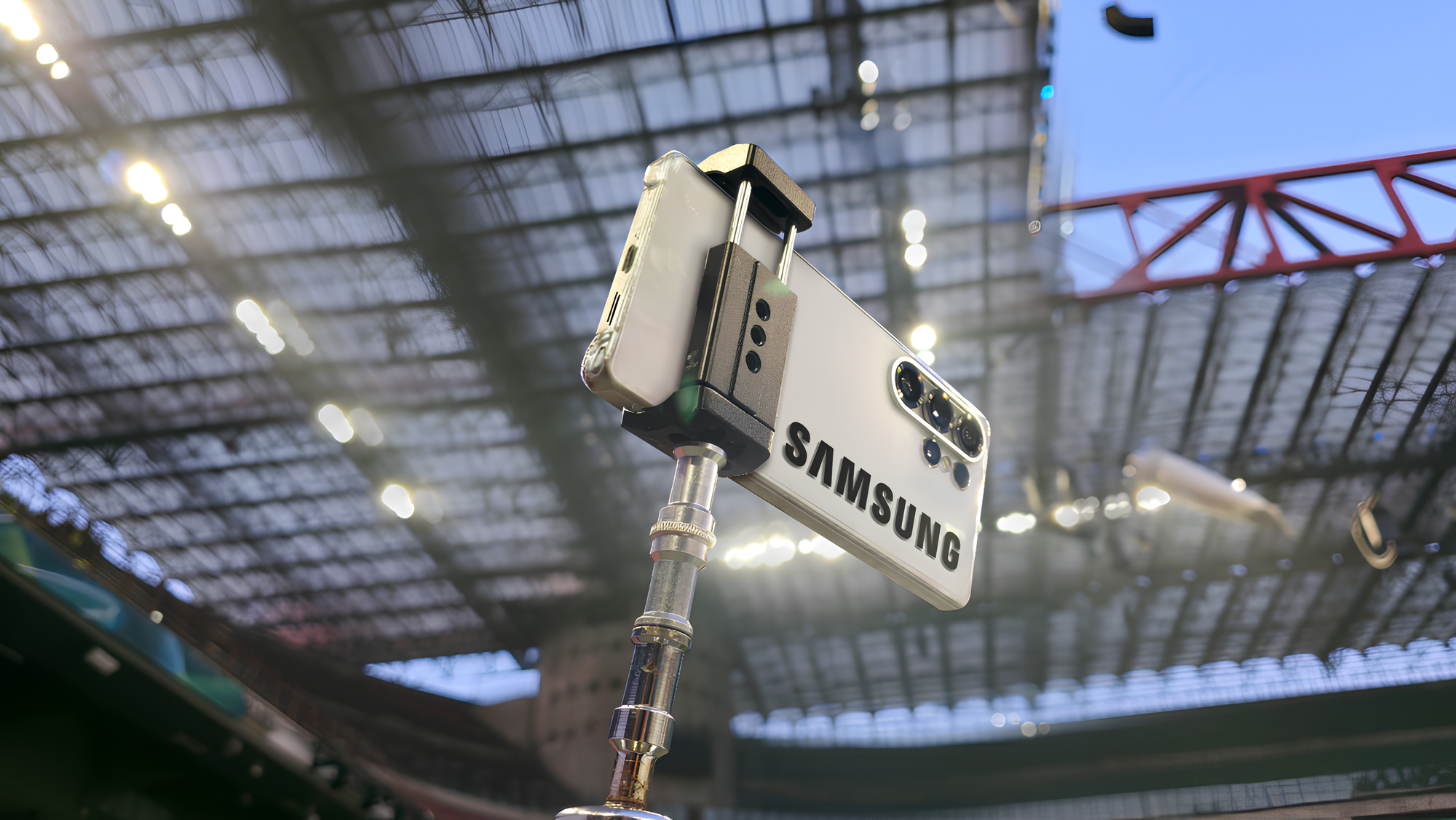
In close collaboration with the Olympic Broadcasting Services (OBS), the South Korean company will integrate the Galaxy S25 Ultra within the broadcast workflow.
The devices will not replace professional cameras, but will complement them by being installed in strategic positions and difficult to access bulky equipment, such as on mobile arms (jib) suspended above the field or inside the tunnels for athlete entry.
Leveraging the 5G connectivity and the lens stabilization, the phones will be tasked with capturing first-person perspectives and new angles, transmitting the video streams wirelessly directly to the international control room.
This hybrid setup aims to offer home viewers a more immersive view of the event, while ensuring that the insertion of mobile devices does not interfere with the standard operations of television production.
Logistical support and assisted translation
The dispersed nature of Milano-Cortina 2026, which involves distant territories, imposes significant logistical challenges, particularly regarding communication among participants of different nationalities.
To mitigate language barriers, a selected contingent of volunteers will be equipped with Galaxy devices featuring the ‘Interpreter’ function. This AI-powered tool enables real-time conversation translation.
A notable detail is that processing takes place directly on the device, ensuring functionality and speed even in the absence of a stable network connection, a critical factor for field operations among athletes, competition officials and visitors.
In addition to verbal communication, the technology will also be applied to monitoring the competitions. In Short Track Speed Skating events, for example, referees will use high-resolution Samsung monitors for video analysis and technical verifications, thus supporting the arbitral decision-making process.
For spectators at the competition venues, dedicated charging stations will also be installed to ensure the operation of personal devices during the extended event sessions.
The institutional presence at Palazzo Serbelloni
Parallel to the activities on the competition fields, Milan will host an institutional reference point at the historic Palazzo Serbelloni.
Named Samsung House, this space will be operational from February 4 to 22 for the Olympics and again from March 6 to 15 for the Paralympics.
Access will be by invitation only, and the facility will serve as a hub for media, partners, and athletes.
Inside the venue, which will also host hospitality management curated by chef Enrico Bartolini, official meetings of the National Olympic Committees will take place and storytelling activities related to the technological evolution of the Games, offering a physical meeting place for industry professionals outside the competitive circuits.