


The global AI frenzy has now transcended mere technological enthusiasm, transforming into an unprecedented pressure on global supply chains.
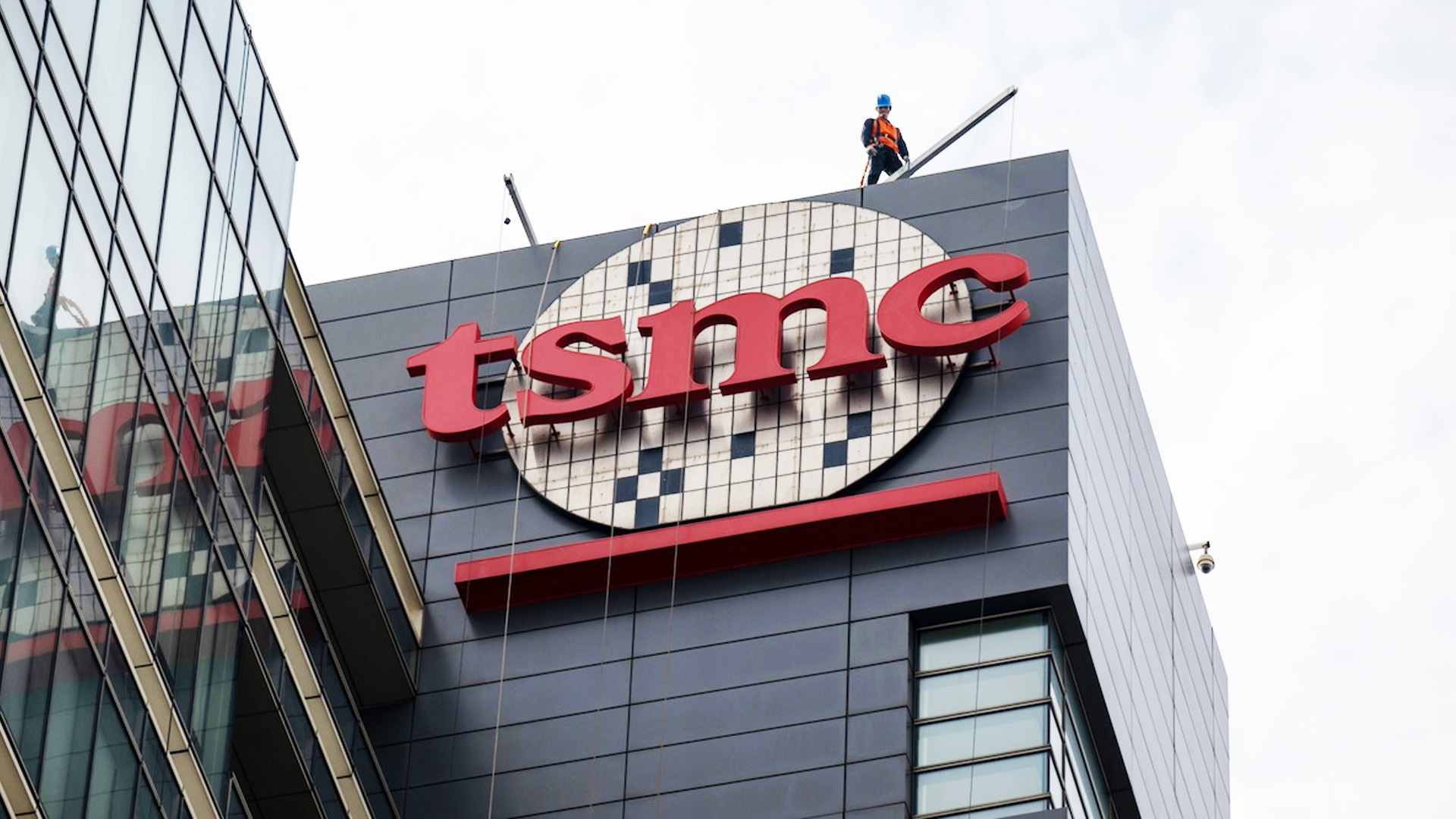
At the center of this vortex sits TSMC (Taiwan Semiconductor Manufacturing Company), the undisputed giant of semiconductor production. The production capacity demand, particularly for the most advanced nodes intended for AI hardware, has reached levels that upend normal market logic.
According to recent reports, the situation is so critical that the major customers in the sector are now willing to pay premiums of up to 100% more than the list price just to secure priority and immediate production.
2nm chips in high demand, TSMC accelerates the best bidder

According to a new analysis by Gokul Hariharan of JPMorgan, TSMC’s production lines are operating under a regime defined as ‘Hot Run’. This technical term indicates an emergency operating mode in which production lots are accelerated through the fab, bypassing queues and drastically reducing wait times.
However, this privilege comes at an exorbitant cost. The analysis reveals that customers, in order to obtain their chips on an ‘accelerated’ basis, agree to double production costs.
This willingness to pay a 100% premium signals a fundamental shift in industry priorities: manufacturing cost has become secondary to speed-to-market (time-to-market).
In a sector where innovation moves quickly, arriving late with a product, especially in the field of generative AI and HPC (High Performance Computing), can cost significantly more than the production cost increases.
AI giants and the need for speed
Although the JPMorgan report does not explicitly name the customers involved in these frenzied negotiations, it is evident that the protagonists are the major players in the AI ecosystem, such as NVIDIA and AMD.
The pressure is particularly palpable for companies like NVIDIA, whose product release cadence has compressed to about nine months.
To sustain this frenetic pace and meet the insatiable appetite of hyperscalers, Jensen Huang’s company cannot afford bottlenecks.
The need to accelerate product releases from production lines and their shipment to partners has become a matter of strategic survival, justifying massive investments to secure priority in Taiwanese foundries.
A ‘High-Mix’ model between profits and operational risks
These ‘Hot Runs’ have allowed TSMC to adopt what is defined as a high-mix service model. In this scenario, the revenues generated from accelerated production begin to represent a significant portion of the company’s overall revenue, inflated precisely by the premiums paid by the most urgent customers. However, this strategy is not without risks.
Managing these priorities raises big questions about long-term operational efficiency. The constant insertion of urgent orders that bypass standard scheduling disrupts the optimized flow of production lines.
This forced ‘stop-and-go’ not only undermines the factory’s overall efficiency, but statistically increases the likelihood of errors and defects in silicon wafers. TSMC is thus faced with balancing the enormous profits from these priority orders with the need to maintain the quality and reliability standards that have made it the world leader.
TSMC confirms once again the most critical cog in the AI value chain. With HPC customers taking an ever-larger share of its revenues, the Taiwanese company is faced with a titan challenge: meeting demand that spares no expense, while maintaining the operational stability necessary to avoid derailing the entire ongoing technological revolution.