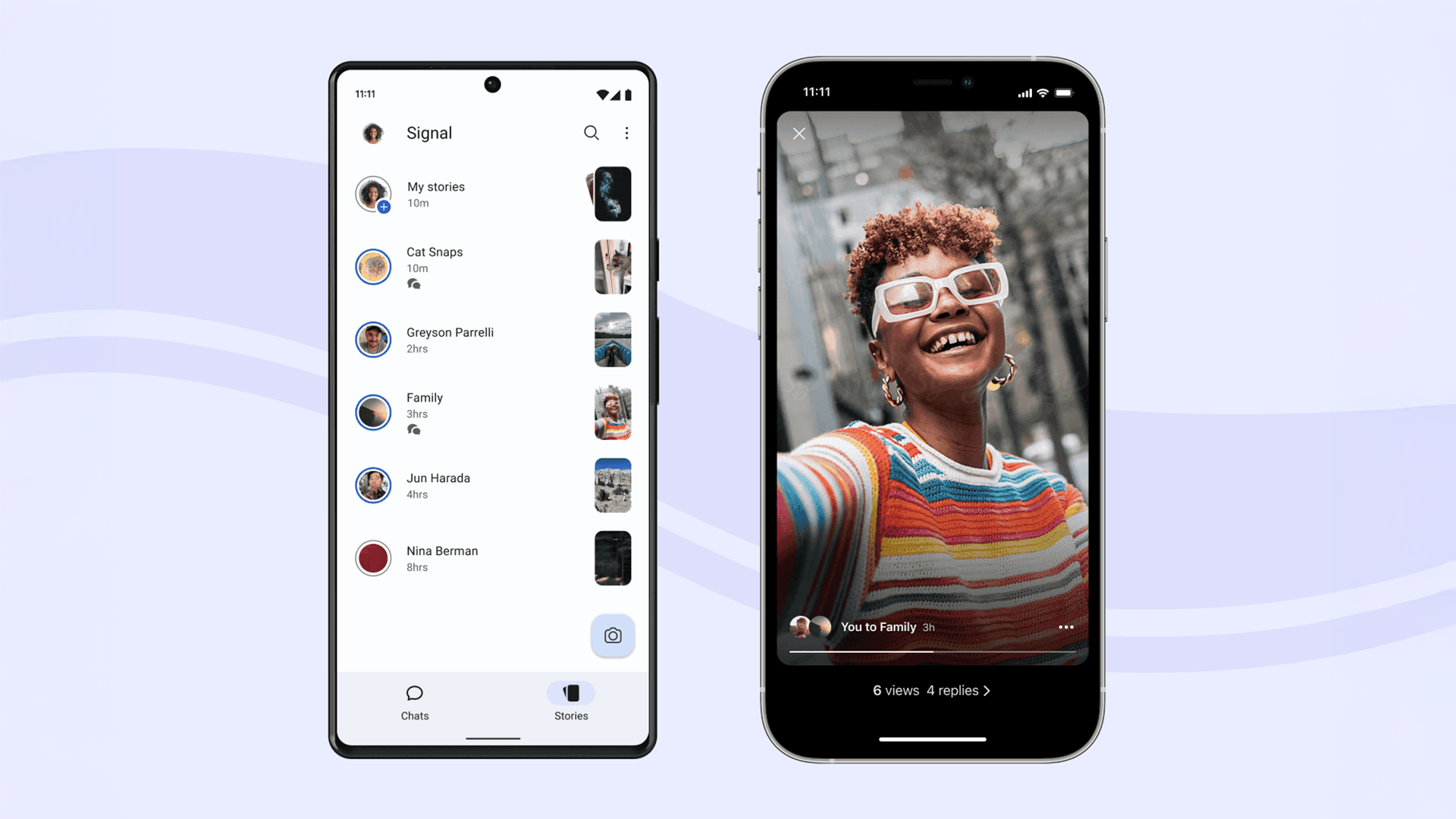
The encrypted messaging application Signal, has long been regarded as a bastion for digital privacy and an essential tool for activists and journalists, and today sits at the center of a controversial federal investigation in the United States.
Attention has focused on the app following activities by some organizers in Minneapolis, who are engaged in monitoring the movements of ICE agents.
This action triggered an immediate reaction from the director of the FBI, Kash Patel, who has launched an inquiry that is raising serious questions among constitutional scholars and civil rights experts.
The FBI is investigating the use of Signal

The manner in which this investigation was announced represents an anomaly compared to standard institutional practices. There was no official press conference at the Department of Justice; the announcement came directly from the voice of Kash Patel during an episode of the “The Benny Show“, a podcast hosted by right-wing commentator Benny Johnson.
Patel argued, even without providing immediate proof, that participants in the chat could incite violence, threaten law enforcement officers, or violate federal statutes.
The genesis of the investigation is closely tied to Cam Higby, an independent journalist who claimed to have infiltrated the activists’ Signal group.
Higby published on the X platform (formerly Twitter) alleged screenshots of the conversations, in which information about the license plates of vehicles used by federal agents was shared.
It was this very post that triggered Patel’s action, who stated that the coordination of such groups, not only in Minnesota but potentially across the USA, justified the immediate opening of a case file. The aim is to arrest anyone who has broken the law, with the aim of using subpoenas, grand juries and data collection.
The clash over constitutional rights
The FBI’s move has provoked a cross-partisan outcry, bringing together critics from across the political spectrum. The Cato Institute, a well-known libertarian think tank, called the operation a constitutional and legal failure of epic proportions by Patel.
At the heart of the dispute is the very nature of the activity being monitored: observing and reporting on the actions of law enforcement is, according to many jurists, protected by the First Amendment.
Experts such as Kevin Goldberg, vice president of the Freedom Forum, have analyzed the material released by Higby without finding overt illegality. According to Goldberg, the group’s organization seemed aimed at community observation and alerting, practices that do not obstruct justice.
Patrick G. Eddington of the Cato Institute has ratcheted up the rhetoric, stressing how decades of federal jurisprudence have affirmed citizens’ right to coordinate peaceful protests and monitor government agencies to prevent abuses, even using encrypted communication tools.
Despite Patel’s insistence that the investigation will target only illegal activities and not freedom of expression, the line remains as fragile as ever.
The limits of encryption and user security
For ordinary users and for activists, the crucial question concerns the technical security of Signal. It is essential to understand that, although Signal uses the end-to-end encryption (which means that not even the company can read the content of messages as they travel from one device to another), this technology is not foolproof against every kind of threat.
The Minneapolis case demonstrates that the main vulnerability is often not the code, but the human element: the digital infiltration into the group, as done by Higby, makes encryption moot because messages are read directly from the recipient’s screen.
Moreover, although Signal stores very little data on users, the company clarified on its website that it will provide chat transcripts if legally compelled and technically able to do so, though the nature of their architecture makes this possibility very remote for the content of messages.
The real risk lies elsewhere: ICE and other federal agencies have contracts with digital forensics companies like Cellebrite. These technologies allow, once law enforcement gains physical possession of a smartphone, to unlock it and extract all data, including Signal messages and location history.
As of now, neither Signal nor its president Meredith Whittaker have issued official comments on the matter, maintaining a silence that weighs as much as the FBI’s accusations.
For Italian users of the messaging app, in this case, there should be no danger on the horizon. Of course it’s always good to remember that, although very secure, Signal does not guarantee absolute inaccessibility to its messages or your identity.