


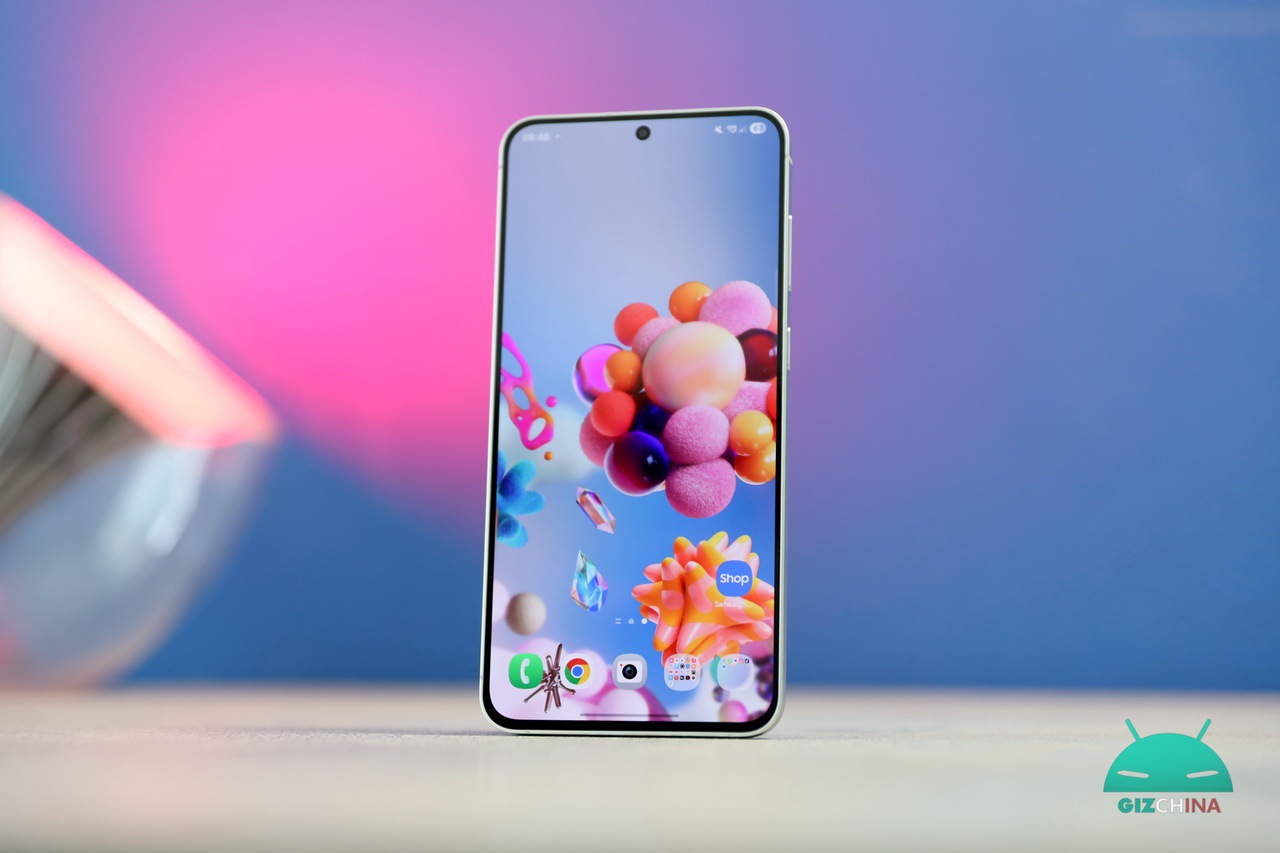
In recent months, a growing number of users with Samsung smartphones have noticed a discrepancy in the distribution of some updates for their device.
The crux of the issue concerns the update of Google Play Services, which on many Galaxy devices appears stuck at dates long past, despite the operating system regularly receiving the latest patches.
After a period of silence, the South Korean giant provided an official explanation that finally clarifies the nature of this delay.
Google Play Services not updated, the nature of the block and the official response

The issue was officially raised by the outlet Heise online, which directly questioned the manufacturer to understand the reasons behind the misalignment of software versions.
Samsung’s response was clear and dismissed hypotheses of malfunctions or negligence: it is a deliberate choice.
The company explained that, during the crucial phases of introducing new devices to the market or in conjunction with the release of significant updates to the proprietary One UI interface, a rigorous control policy is applied. Samsung explicitly stated that it distributes exclusively software that the company has internally verified.
Consequently, the automatic distribution of Google updates has been temporarily suspended to avoid potential technical conflicts or stability issues that could arise from combining the new Samsung software with the latest versions of Google services not yet fully tested on the specific hardware.
However, the company has also provided a precise timeline, confirming that the restoration of the Google update is expected within the software package planned for January 2026.
Visible discrepancies and security management
Galaxy smartphone owners observed that, even though they received the Android system update that brings the security level to December 1, 2025, the Google Play system update entry remained stuck at earlier versions, such as July 1, 2025, August or September 2025.
This asynchronous behavior has raised concerns that devices could be vulnerable, as usually all software components are expected to move in tandem.
However, Samsung reassured users that this decision is part of a controlled process that does not compromise the device’s security.
From an IT security perspective, the delay in updating Google Play Services does not constitute an immediate critical problem, otherwise the company, known for its attention to data protection (especially in corporate and business contexts), would not have adopted such a strategy.
The priority for Samsung remains system integrity, which is why its devices are widely used in professional environments where stability is as essential as the update.
The complexity of the Android ecosystem
The episode highlights the complex layering of updates in the Android world, a structure that often proves opaque to the end user.
A modern smartphone does not receive a single block of updates, but is subject to different maintenance streams. On one hand there are the major system updates, which for Samsung occur once or twice a year and bring new versions of Android and One UI.
On the other hand there are the specific security patches for Android, released by Google and implemented by manufacturers, which now tend to have a quarterly cadence for many models.
Regardless of these two streams, there are finally the Google Play system updates, which Google provides and distributes directly on a monthly basis to keep the OS libraries and essential services up to date, bypassing in theory the manufacturers’ technical timelines.
It is precisely at this third level that Samsung intervened, blocking the automation to ensure that new versions of Play Services do not interfere with the launch of its new software products. Users can therefore rest assured: the delay is not a sign of abandoning support, but a precautionary measure that will be normalized at the beginning of 2026.