


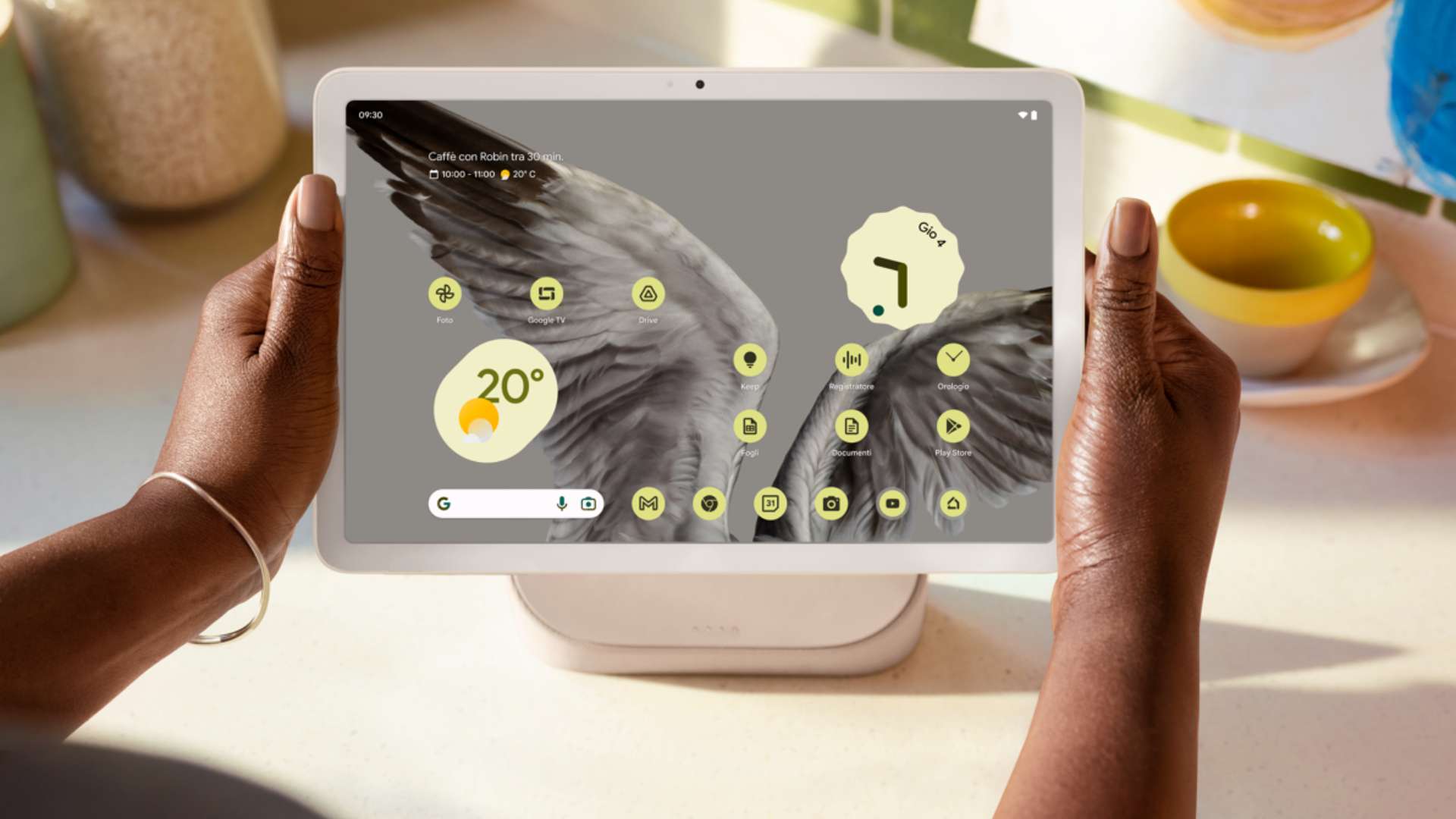
Anyone who owns a Pixel Tablet has often had to contend with an approach from Google that, over the years, has sometimes appeared discontinuous and inconsistent regarding the tablet segment.
However, this time the Mountain View company has decided to positively surprise its user base with an announcement that shakes up the status quo and could persuade device owners to postpone any plans to replace or prematurely retire the product.
Google extends the Pixel Tablet’s life, well done!

The main novelty concerns a significant extension of official software support. Google has indeed decided to guarantee the Pixel Tablet two additional years of complete Android operating system updates.
If initially the lifecycle planned for major OS releases ended in June 2026, the official support page has quietly been updated to reflect a new deadline: June 2028.
The change is fundamental because it finally aligns the operating system updates with security patches. Previously, there was a discrepancy in which the support for new Android features ended two years earlier than security patches.
Now, instead, the Pixel Tablet will enjoy full coverage for a total of five years, guaranteeing users not only a secure device but also access to the latest software features for a considerably longer period than originally anticipated at the time of purchase.
The strategy behind the Tensor G2
This move isn’t entirely unexpected for the most attentive observers of Big G’s internal dynamics. The decision follows a precedent set at the end of 2024, when the company applied the same extension of support to its Pixel 6 series smartphones and Pixel 7, bringing them from three to five years of updates.
The through line that links the tablet to these smartphones is the hardware: the Pixel Tablet, launched in 2023, is powered by the same Tensor G2 processor present in the Pixel 7 family.
It is evident that, having decided to keep the software platform updated for smartphones equipped with this chipset, for Google it has proven technically logical and sustainable to extend the same treatment to the tablet as well.
This is a move that rewards ecosystem coherence and values the investment made by users in a hardware architecture Google still considers valid and capable.
Will there be a new Pixel Tablet?
On one hand, the extension of software support is excellent news for those who already own the device, but on the other hand it could hide a less rosy reality regarding the hardware’s future.
The industry has watched skeptically rumors about a possible Pixel Tablet 2 or even a direct leap to a third generation; rumors that were dampened by the company itself when it hinted that the development of new tablets has been put on pause.
Unlike competitors like Apple and Samsung, who dominate the market with clear strategies and steady releases, Google still seems to struggle to find the winning formula to make its tablets true best-sellers. The first model received mixed reviews and failed to establish itself as a true rival to the iPad or Galaxy Tab.
In this context, the announcement of extended support comes with a notable delay, over a year after launch, a detail that suggests the tablet sector has perhaps slipped to the background in Mountain View’s priorities.
For the end user, however, the practical result is what matters: the current Pixel Tablet will have a much longer operational life than expected, turning into a reliable companion up to 2028, regardless of whether Google decides to produce a successor.