


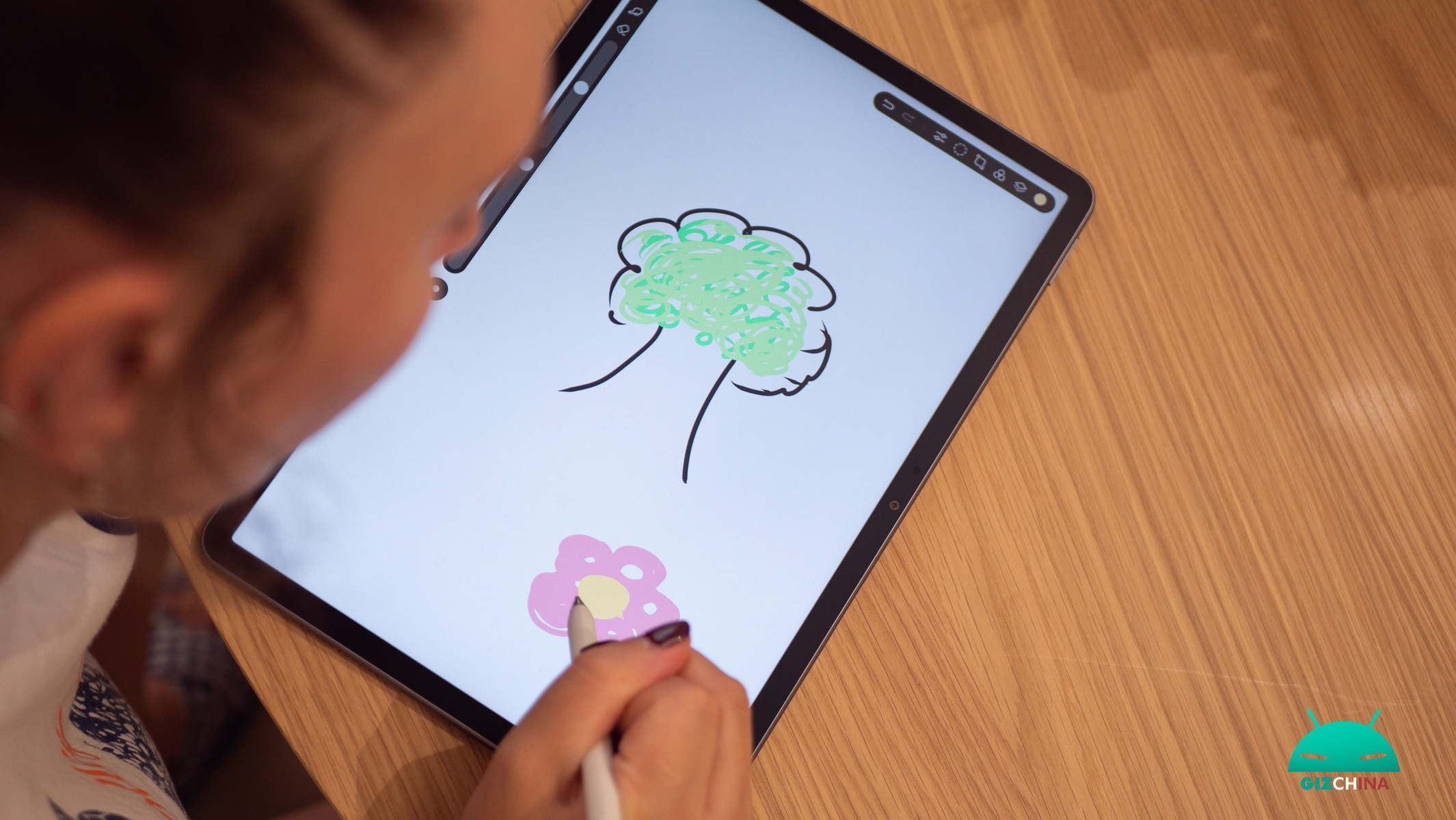
The image is now common in restaurants, waiting rooms and even during walks in the park: very young children, often still in their stroller, hypnotized by the bright screen of a tablet or a smartphone.
For many exhausted parents, that device represents a respite, a sort of ‘digital babysitter’ capable of guaranteeing a few minutes of silence.
However, a new and worrying study conducted in Singapore suggests that the price to pay for that momentary tranquility could be very high, mortgaging the child’s future cognitive and emotional development.
The ‘iPad Kids’ and the paradox of accelerated brain development

According to researchers from the Agency for Science, Technology and Research (A*STAR), early exposure to screens (the one that occurs before the age of two) is directly linked to long-term consequences that manifest years later: slower reaction times in decision-making processes during childhood and an increase in anxiety symptoms once adolescence is reached.
The study, which followed a group of 168 children for more than a decade, revealed a biologically fascinating yet unsettling mechanism.
Contrary to what one might think, exposure to screens does not slow down brain development in absolute terms, but rather accelerates it in an abnormal and damaging way. Children exposed to devices at a young age showed accelerated maturation of the brain networks involved in visual processing and cognitive control.
Dr. Huang Pei, the study’s lead author, explains that during normal physiological development, brain networks gradually specialize. This slowness is necessary. In children with high exposure to screens, however, the networks that control vision and cognition specialize too quickly, crystallizing before they have been able to develop the efficient connections necessary for complex thinking.
The result, according to Huang, is a limited brain flexibility and reduced mental resilience. The brain, forced to “run” too early to process digital stimuli, loses its adaptability, leaving children less equipped to face the cognitive and emotional challenges of growth.
MRI Scans and Adolescent Anxiety
The methodology used by the researchers was rigorous and sits within the broader GUSTO study (Growing Up in Singapore Towards healthy Outcomes), which monitors mothers and children since 2009.
To understand physiological changes, the team subjected the children to magnetic resonance imaging (MRI) at ages 4.5, 6, and 7.5 years. In addition to the brain scans, the researchers cross-referenced the data with cognitive tests administered at eight and a half years to measure decision-making abilities, and finally with anxiety questionnaires completed by the youths when they turned 13.
The results drew a clear trajectory: children with that specific accelerated maturation of the visuo-cognitive network took much longer to make decisions during cognitive tasks in childhood.
This difficulty in processing choices translated, years later, into significantly higher levels of anxiety during adolescence. There is therefore a biological thread linking the tablet in the high chair to the teenager’s emotional distress.
A Public Health Alarm?
The implications of this finding are described by the authors as critical for the future of public health. The data collected in the study, covering the period 2010-2014, showed that the children in the cohort spent on average one to two hours a day in front of a screen.
This data is already in sharp contrast with the guidelines of the World Health Organization, which recommends zero screen time for one-year-olds and no more than one hour (preferably less) for two-year-olds.
However, the research team highlights an even more alarming aspect: the data analyzed predate the COVID-19 pandemic and the global explosion in mobile device use.
It is highly likely that today’s exposure levels are significantly higher than those observed a decade ago, making the developmental implications even more urgent.
Earlier analyses by the same team had already highlighted how the emotional regulation was compromised in children saturated with screens, a phenomenon well known to any parent who has had to manage a crying episode after taking an iPad away from a child.
The antidote is analog
Facing this scenario, what can a parent do? The answer provided by the study is reassuring and lies in an ancient practice: shared reading.
The researchers found that children whose parents frequently read stories to them at age three showed a weakened link between screen exposure and altered brain development.
Tan Ai Peng, a senior researcher at A*STAR, notes that while limiting screens in the first two years remains crucial, active parental engagement acts as a powerful protective factor.
Reading together, asking questions about the story and engaging not only promotes linguistic skills, but also seems to help the brain develop at a healthy and steady pace, countering the negative effects of technology.