


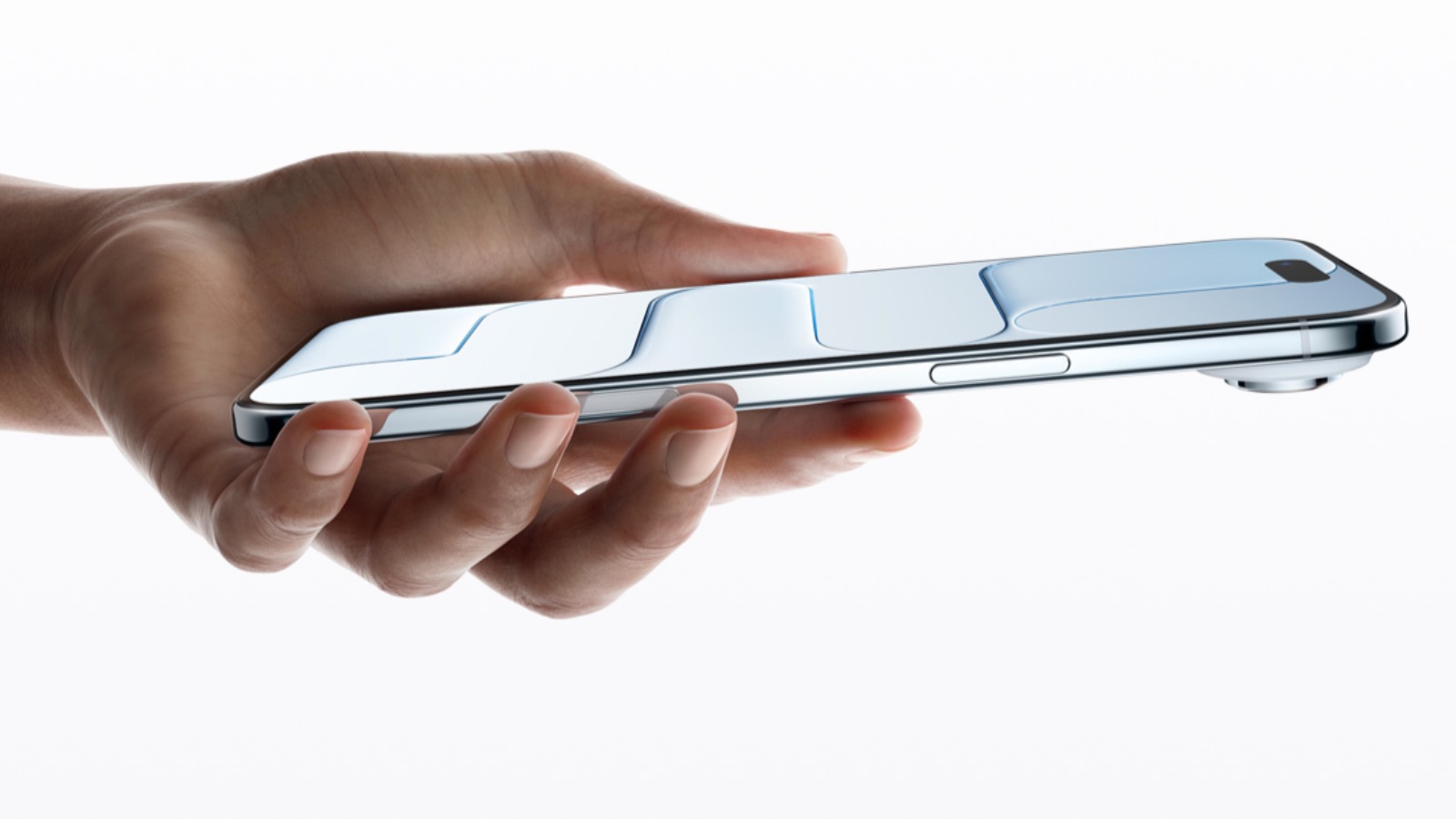
The iPhone Air represents the pinnacle of Apple’s obsessive pursuit of ever-thinner and more minimalist design: a device with such a slim profile that it forces Cupertino engineers to sacrifice historical components, first and foremost the physical SIM slot.
nFor the vast majority of users, adopting exclusively the technology eSIM is an acceptable compromise, if not even a step forward toward total digitalization.
nHowever, in the underground world of hardware enthusiasts and the boldest modders, the word ‘impossible’ often sounds like a challenge.
nA possible modification has actually emerged that allows reinserting the SIM tray even in the ultra-thin iPhone Air, although the price to pay, in terms of warranty and functionality, is decidedly high.
niPhone Air gains physical SIMs, but the required modifications are invasive

Apple’s decision to launch an iPhone Air exclusively compatible with eSIM was not dictated solely by aesthetic whims, but by strict internal necessities. Every cubic millimeter inside the chassis is precious, and removing the physical reader allowed achieving thicknesses that a few years ago would have seemed unthinkable.
nThis move has had global repercussions, accelerating the adoption of virtual SIMs also in traditionally conservative markets like China.
nThe Asian giant, which for years has shown some reluctance to abandon the physical SIM card due to infrastructural and cultural factors, has found itself forced to embrace the change driven by the popularity and exclusivity of Apple’s new form factor.
nYet, despite the push toward the future, there are those who have decided to look back, seeking an artisanal solution to bring physical connectivity back to life.
nA high-risk transplant
Some enterprising users have devised a complex procedure that could be defined as a true surgical intervention on the hardware.
nTo make space for the SIM card reader, which was not planned in the original design, it is necessary to sacrifice one of the iPhone’s most sophisticated components.
nApple’s haptic feedback system, known for its precision and tactile feel, occupies a volume that, in this modification, is claimed by what had been lost.
nThe modification involves removing the original motor, which is replaced by two distinct new elements. The first is a significantly smaller vibration motor, capable of providing only basic tactile feedback, far from the premium experience offered by the factory component.
nThe second element is, of course, the assembly of the physical SIM slot. This replacement allows the SIM card to be read and to function normally inside the phone.
nThe hidden costs of a hobbyist project
Although the idea of hacking an Apple device can be fascinating due to the ingenuity demonstrated, the practical application of this modification is not advisable for 99% of users.
nThe first and most obvious obstacle is the immediate voiding of the warranty. Opening a sealed device, removing proprietary components and installing third-party parts is the fastest way to lose any kind of official support from the manufacturer.
nMoreover, the value of the phone would plummet drastically: a tampered iPhone Air would hardly find space in the conventional used market.
nThere are also non-negligible technical uncertainties. It is not yet clear what the energy impact of this transformation will be.
nOn one hand, using a smaller vibration motor could theoretically consume less energy, but on the other hand the constant powering of the physical SIM reader could erode the battery’s endurance margins, which on an ultra-thin device is already at the limit.
nThis operation thus remains a ‘vanity project’, an exercise in style for those who have advanced technical skills and a disposable income such that they do not worry about ruining an iPhone Air, just to be able to say they own a one-of-a-kind piece.
n