


The dream of digital convergence—the possibility of owning a single pocket-sized device capable of replacing laptops, desktops and smartphones, is a chimera that has been pursued for years.
Imagine a digital life that revolves entirely around your phone, powerful enough to transform into a complete workstation as soon as it7s connected to a monitor. If this prospect fascinates you, new hardware is emerging on the horizon promising to realize this very desire.
It is called NexPhone and is the latest creation from the Nex team, already known for the “hardware-free” NexDock laptops that harness the computing power of smartphones. However, to embrace this futuristic vision, it will be necessary to accept non-trivial compromises.
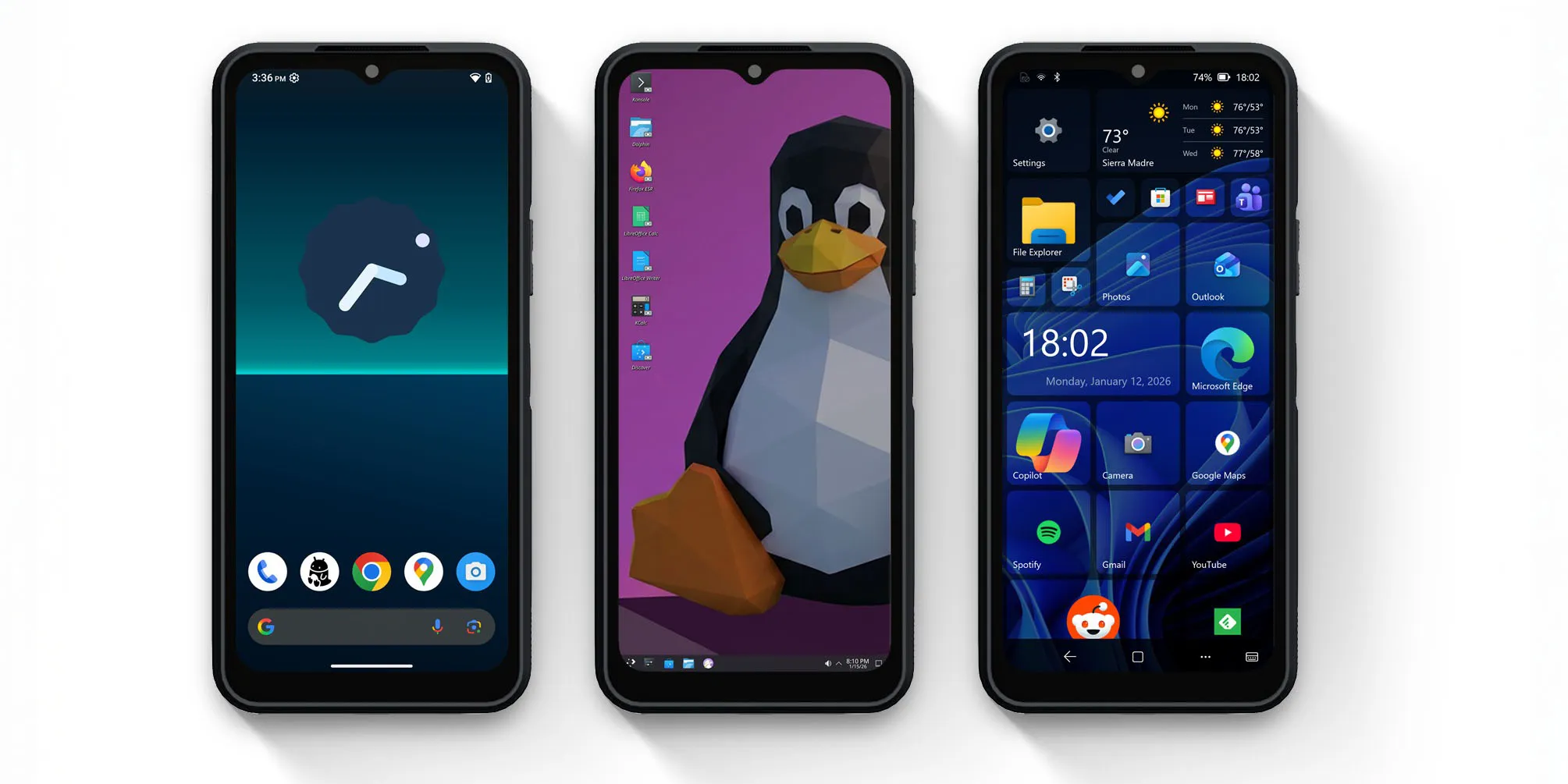
NexPhone is the “convergent” smartphone that runs Android, Linux, and Windows 11
Observing the NexPhone, one gets the impression of having taken a step back in time. Far from the sleek and slim lines of current flagships, the device aesthetically resembles an inexpensive Android smartphone from the late 2010s.
The body is bulky, characterized by thick bezels and a rubberized gray chassis that doesn’t shout innovation. With a thickness of over 13 millimeters and a weight that surpasses 250 grams, portability could suffer, making you long for lighter solutions.
Despite the austere and somewhat retro look, the technical spec hides elements of value that save the device from immediate obsolescence. The front panel is a 6.58-inch display with FHD+ resolution and a refresh rate of 120 Hz, ensuring visual fluidity in step with the times.
The camera department also holds up well with a primary sensor Sony IMX787 of 64MP, and the RAM provision of 12GB, suggests that beneath that Spartan design there is an intention to handle heavy workloads.
Three souls in one body
The real strength of the NexPhone, the one that clearly distinguishes it from the uniform mass of the mobile market, is its multi-boot configuration. The device doesn’t just run Android 16, with which it ships factory-installed, but opens the doors to a full desktop experience.
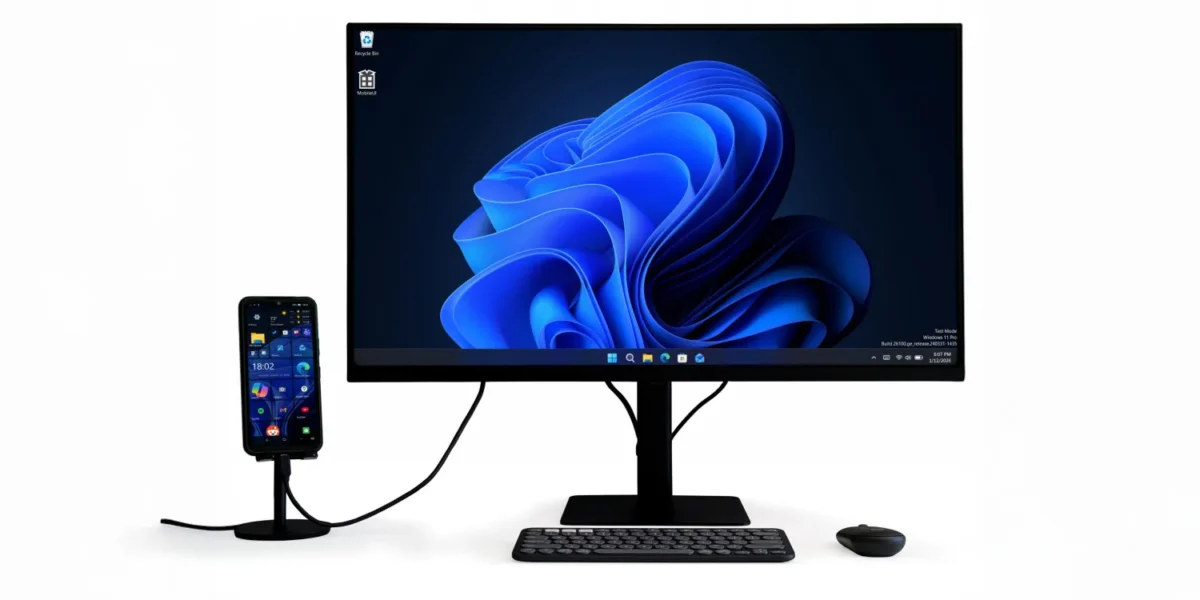
By connecting the phone to an external monitor, the user can launch a full Debian-based Linux version, turning the phone into a PC for productivity or development.
But the project’s ambition doesn’t stop here; NexPhone is capable of running Windows 11 as well.
Although the switch to Microsoft’s operating system requires a reboot of the device, the possibility of having a full Windows PC in the back pocket is undeniably fascinating.
The developers have even planned a customized user interface inspired by the old Windows Phone to make the Windows 11 experience usable on the move, without external screens.
The Achilles’ heel
If the basic idea is excellent, the technical execution runs into a significant obstacle: the processor. The NexPhone is powered by the SoC Qualcomm QCM6490. This is an enterprise-grade chipset designed primarily for the Internet of Things (IoT) and industrial devices, the same used by the Fairphone 5 of 2023.
In practical terms, we’re talking about a variant of the Snapdragon 780G, a mid-range chip dating back to the end of 2021.
This hardware choice represents the real limit of the project. Although Qualcomm guarantees support for this chip until 2036 and Microsoft lists it among the platforms supported for Windows 11, the raw power might not be sufficient.
Running a desktop operating system as complex as Windows on a mid-range mobile processor from several years ago risks translating into a frustrating user experience, limited to basic tasks such as checking email. Moreover, the energy impact on a 5,000 mAh battery would be devastating, making Windows mode autonomy extremely reduced.
The NexPhone thus seems a bold experiment that aims to anticipate a future in which the boundary between phone and computer vanishes.
However, with a planned launch for the third quarter of 2026 and a price of around 549 dollars, it could hit the market already old, especially when compared with the power of modern chips such as the Snapdragon 8 Elite or the versatility of future foldables.
For now, it remains a brilliant idea awaiting hardware that lives up to its ambitions.